
Is erotic 3D modeling art or is it P0rn0graf1a?


This site is supported by its readers, and we may receive commissions if you purchase products through our links, at no additional cost to you. More information..
Erotic 3D modeling is a topic that generates debate, makes some people uncomfortable and fascinates others. With the advent of domestic 3D printing and the popularization of platforms where digital models are shared, the creation of figures, sculptures and objects of a sexual or sensual nature has become accessible to anyone. This raises a fundamental question: Are we facing a contemporary art form or simply a new form of digital p0rn0graf1a?
In this article, we will explore what erotic 3D modeling is, its origins, its impact on society and the arguments that place it in the realm of art or p0rn0graf1a. In addition, we will reflect on the ethical and legal limits of this type of creations and their potential in today's digital culture.
In the end, the idea is to open the debate: Where do we draw the line? What do you think about erotic 3D modeling?
What is 3D erotic modeling?
Erotic 3D modeling is a discipline within digital design that focuses on the creation of figures, scenes or elements with explicit or sensual content, oriented to generate an erotic response in the viewer.
These models can vary greatly, from artistic sculptures inspired by the human figure to highly sexualized graphic representations, sex toys, props or even explicit scenes.
Erotic 3D modeling has a recent history, but it connects to a millennia-old tradition of representing the human body and sexuality in art.
From the statues of fertility goddesses in prehistoric times, through classical Greco-Roman sculptures, to the paintings and prints of the Renaissance, eroticism has been a recurring theme in all forms of artistic expression.
The difference now is that, thanks to 3D printing technology, these creations are not only seen on a screen or in a gallery: they can materialize physically, in the privacy of a home or in an exhibition.
Erotic 3D modeling also encounters other genres such as fetish, fantasy, cosplay and character design, making it a powerful tool for exploring desires, aesthetic concepts and social discourses.
However, it is not without its critics: to what extent do these representations promote a healthy view of sexuality? And when do they cross the line into objectification or exploitation?
Art or p0rn0graphy? The eternal debate
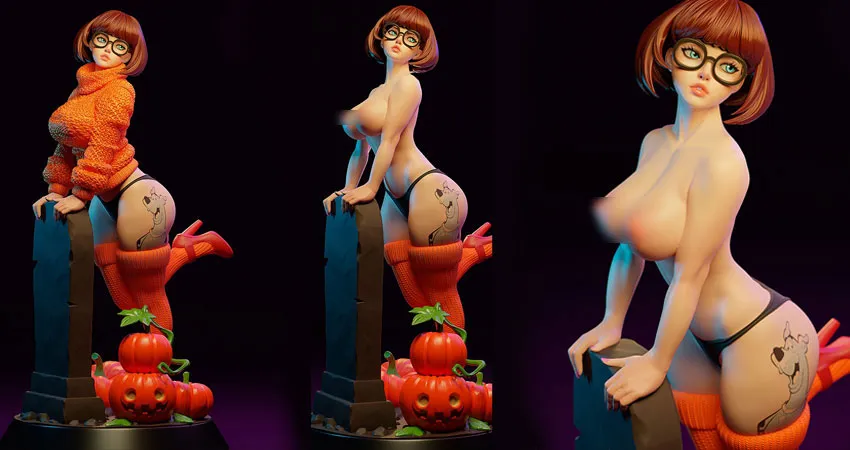
The debate over whether erotic 3D modeling is art or p0rn0graf1a is not new. It is, in fact, a reflection of much older discussions around eroticism and the representation of the human body in the visual arts. Where is the boundary between the artistic and the obscene? Who defines it? And, more importantly, does it depend on the object itself or on the intention of the creator and the context in which it is presented?
For some, erotic 3D modeling is a natural extension of artistic expression: a way to explore beauty, desire, sensuality and human imagination through technology. These creations can be digital or physical sculptures that exalt anatomy, reinterpret classic myths, or simply celebrate the diversity of bodies and fantasies. In this sense, many argue that erotic 3D modeling is art because it provokes emotions, invites reflection, and contributes to the cultural conversation about sexuality.
On the other hand, there are those who consider many erotic 3D models to be nothing more than pornographic objects. They argue that most of these models present hypersexualized bodies, unrealistic proportions and situations that objectify women in particular. In addition, they point out that the consumption of these models can feed harmful stereotypes and desensitize people to issues of consent, respect and healthy relationships.
The key point in this debate often lies in intent and use:
- Was the model created to explore an aesthetic or philosophical concept, or just to sexually arouse?
- Is it an exhibition piece or an object intended for private consumption, such as a toy or an erotic figure?
- Does the context of the work allow it to be interpreted as art, or is it purely an explicit representation without further reflective content?
These questions do not have universal answers, but they allow us to understand why erotic 3D modeling can be seen as art by some and as p0rn0graf1a by others. Ultimately, the line between the two concepts is blurred, subjective and deeply influenced by culture and time.
Famous and controversial cases: art or gratuitous provocation?
To understand how this debate is experienced in practice, it is useful to look at some real cases that have generated controversy in the maker community and in the digital art world. Below, we review some examples that have sparked intense debates about the artistic or pornographic nature of erotic 3D modeling.
Caso 1: «Venus Reimaginada» – ¿homenaje al arte clásico o hipersexualización?
A well-known digital artist published on platforms such as ArtStation and Patreon a series of 3D sculptures titled Venus Reimaginedin which he recreated classical figures such as the Venus de Milo, but with exaggerated proportions: huge breasts and buttocks, extremely thin waists, and poses more suggestive than the originals. While some applauded the impeccable technique and the homage to classical forms, others accused him of trivializing art and turning historical works into objects for sexual consumption.
Caso 2: Modelos «NSFW» en plataformas como CGTrader, Cults3D entre otros
El creciente mercado de modelos 3D para impresión ha visto una explosión de modelos etiquetados como «NSFW» (Not Safe For Work). Algunos son figuras de personajes de anime o videojuegos en poses provocativas, mientras que otros directamente representan escenas sexuales explícitas. Esto ha generado críticas por parte de usuarios que consideran que estas plataformas están inundadas de contenido que cosifica a las mujeres, mientras otros argumentan que es una forma válida de arte erótico para adultos.
An example is the «Fantasy Elf Warrior NSFW»available on various platforms, which has generated intense debates on forums such as Reddit and Discord about whether it is art or just a sex object.
Caso 3: El fenómeno «Hentai 3D» en la impresión doméstica
The hentai culture, originating in Japan, has found in 3D printing a massive avenue of expression. Explicit models of anime characters have been developed and are even sold as STL in online stores. This raises a critical question: is it art inspired by pop culture, or is it p0rn0graf1a that exploits anime aesthetics for purely sexual purposes?
Some argue that the kawaii aesthetic, with youthful-looking characters, can cross complicated ethical lines, while others argue for creative freedom.
These cases illustrate how erotic 3D modeling moves in a gray zone. For some, it is a modern art form that explores the limits of desire and aesthetics; for others, it is simply p0rn0graf1a masquerading as art.
Questions you should ask yourself before downloading or printing an erotic 3D model
Before jumping into downloading or printing any 3D model of erotic content, it is essential to pause and reflect on several issues. This will not only help you make more responsible decisions as a consumer or creator, but can also avoid legal, ethical or personal conflicts. Here are some key questions to ask yourself:
1. Do I know the origin of the model?
Many erotic models circulating on the Internet may have been created from copyrighted works, such as video game, movie or anime characters. Printing or sharing them could infringe on intellectual property, which is not only a legal issue, but also an ethical one. Are you sure the model is original or properly licensed?
2. Am I reifying someone or participating in a problematic representation?
Some erotic 3D models depict female (or male) figures in a hypersexualized manner, with unrealistic proportions or even features that could be considered underage. Before downloading and printing, it's worth asking yourself: does this model reinforce harmful stereotypes, could it offend or make other people uncomfortable, am I encouraging objectification or problematic fetishism?
3. Where will I display or use it?
The final destination of the model also matters. Do you plan to display it in your home, share it on social media, or simply use it for your personal enjoyment? If you plan to share it publicly, consider whether it might hurt sensitivities or generate negative reactions. Also think about whether the model will fit in the context in which you will display it: is it a safe space for these expressions?
4. What is my intention in printing this model?
Reflect on the why is key: Are you doing it out of curiosity, for fun, as part of an art project, or for personal consumption? Are you exploring your creativity or just downloading something you saw and it caught your eye? Being clear about your motivations can help you decide if you really want to move forward.
5. Do I know the legal implications?
In some countries or jurisdictions, the printing and distribution of certain erotic models may be subject to legal restrictions, especially if the models depict underage characters or explicit situations that may be considered illicit. Have you researched local laws regarding this type of content? Are you willing to assume the legal risks?
Reflecting on these questions is not censorship: it is taking a critical and responsible look at what we download and print. 3D printing, like any tool, can be an avenue for creativity or a tool to reinforce broader issues. The choice is in your hands.
The boundary between art and p0rn0graf1a: who defines it?
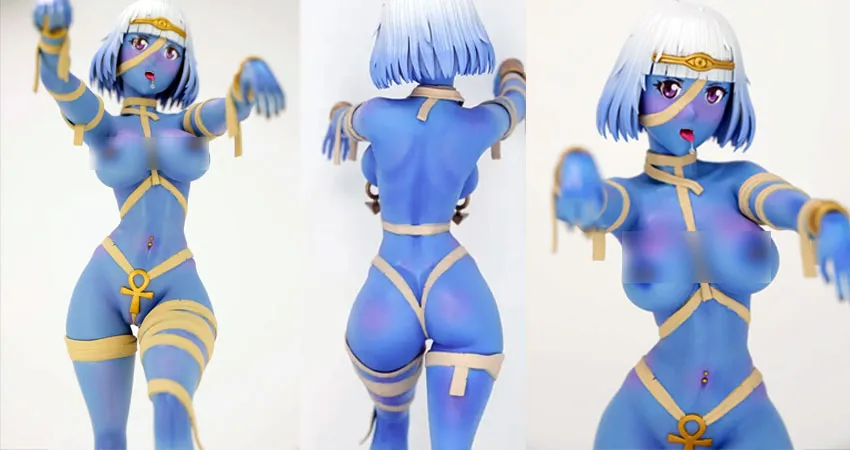
The fine line between art and p0rn0graf1a is a topic of debate that has existed for centuries, long before the advent of 3D printing. From classical sculptures to contemporary photographs, the representation of the human body has been a constant in the history of art. However, what happens when we take these representations into the world of 3D modeling? How do we know if what we are creating or printing is art or falls into the category of p0rn0graf1a?
What is art and what is p0rn0graf1a?
The definition of art is subjective and has changed throughout history. Generally, art is associated with the expression of ideas, emotions or concepts, while p0rn0graf1a is often focused exclusively on sexual stimulation, often devoid of a broader artistic or cultural context. However, this distinction is not always clear-cut: a classical sculpture of a nude figure might be considered art, while a hypersexualized 3D figure of a fictional character might be considered pornographic.
The problem arises when we ask ourselves: who has the authority to define that line? The creators? The consumers? The 3D model download platforms? Or even the censorship algorithms in social networks?
Censorship on social media platforms and networks
Platforms such as Thingiverse, MyMiniFactory or Cults3D often have clear policies on adult content, but often these policies are ambiguous or contradictory. Some clearly erotic models may remain online for months, while other more subtle ones are quickly removed. The same thing happens on social networks: a female figure model with realistic proportions may be censored, while another with exaggerated proportions may not.
Esto genera una especie de «censura selectiva» que depende de factores como la notoriedad del creador, la percepción del público o incluso los algoritmos que detectan «piel» en las imágenes. La subjetividad está presente en todo el proceso.
Who should decide?
Ultimately, the decision of what is art and what is p0rn0graf1a should be a constant dialogue between creators, consumers and communities. However, this dialogue is not always easy: commercial interests, distribution platforms and legal regulations influence much more than it seems. Reflection on the social and cultural impact of our creations is also important: are we creating something that contributes to the artistic debate or are we simply seeking to provoke or attract attention?
The limit, then, is not fixed: it is diffuse, changing and depends largely on the collective perception. What for some is art, for others may be offensive or even illegal. Recognizing this diversity of opinions is key to navigating this terrain with respect and responsibility.
Erotic 3D models and copyright: a legal ticking time bomb
Erotic 3D modeling is a growing industry, but also a legally complicated field. Many creators download character models from video games, anime or popular movies and transform them into erotic or pornographic figures, often without permission from the rights holders. This raises a key question: is it legal to create, sell or even share these models?
Intellectual property in the 3D world
In most countries, fictional characters are protected by copyrights, trademarks and sometimes even design patents. This means that creating a 3D model based on, for example, a character from Overwatch, League of Legends either Final Fantasyeven if it is an erotic reinterpretation, is technically a copyright infringement.
The fact that the models are distributed for free on platforms such as Patreon, Gumroad or MyMiniFactory does not eliminate this problem. Although some creators add disclaimers like "this is a non-profit fanart."The reality is that, legally, they have no right to use those IPs (intellectual properties).
What if the model is completely original?
If a 3D model is created from scratch, inspired by the human body or based on an own idea, there are no legal problems, at least in terms of copyright. However, even in these cases, there are ethical issues that may arise, such as the representation of hyper-realistic or hypersexualized figures that may influence gender perception, the sexualization of female characters or even the creation of models based on real people without their consent.
What are the risks for creators and users?
Creators of erotic models of copyrighted characters are exposed to lawsuits from IP owners, especially if they sell the models or distribute them on a large scale. Although lawsuits are not frequent, there have been notorious cases, such as the closure of Patreon accounts or the removal of profiles on Gumroad for selling unlicensed models.
On the other hand, users who download these models may also be affected if they use them for commercial purposes, or even if they display them on social networks and their posts are reported or removed for copyright infringement.
What does the law say?
In short, creating or sharing erotic 3D models of copyrighted characters is, in most cases, illegal. Although fans may argue that it is a tribute or a form of artistic expression, intellectual property laws are often very strict and do not distinguish between an artistic tribute and an infringement.
Therefore, it is essential to be informed before downloading or sharing models, especially if the objective is to monetize these designs.
Real-life cases of legal problems in 3D erotic modeling
Although this topic is often discussed in specific forums or communities, there are real cases where the legal implications of erotic 3D modeling have ended in lawsuits, content deletions or account closures. Below, we review some examples that illustrate how this topic can become a ticking time bomb for creators and users.
1. The case of Patreon and celebrity erotic models.
In 2020, Patreon began deleting accounts of creators selling erotic models based on video game, anime and movie characters. Many of these accounts offered 3D models of characters like Tracer of Overwatch or Tifa of Final Fantasy in explicit poses and attire. Following complaints from studios such as Blizzard and Square Enix, these accounts were shut down for copyright infringement.
2. Nintendo and its policy against fan art and unofficial models
Nintendo is known for its zero tolerance policy towards any unauthorized use of its characters, including erotic 3D models. There were several cases where character models such as Princess Peach either Samus Aran in erotic or pornographic versions were removed from platforms such as Gumroad and Patreon, after Nintendo sent Cease & Desist notices.
3. Account closures in distribution platforms
In 2022, MyMiniFactory and Cults3D began receiving legal notices to remove unauthorized 3D models of protected characters, even if they were in "alternate" or sexualized versions. Creators who attempted to hide character names or use generic descriptions were also affected, as rights holders tracked the models by their visual design.
4. Cases of sanctioned users in social networks
Some users who posted images or videos of erotic 3D models based on well-known characters on platforms such as instagram either Twitter received sanctions, such as the removal of their posts or the suspension of their accounts, after being reported for copyright infringement or for violating the content standards of these platforms.
What can we learn from these cases?
These examples make it clear that, although erotic 3D modeling can be a fascinating artistic field, there are legal boundaries that should not be ignored. Lack of a license or permission to use protected characters can lead to serious problems, from content removal to legal action.
Therefore, it is essential to differentiate between what is legally safe (original models, not based on protected IPs) and what can put us at risk.
Is erotic 3D modeling art, p0rn0graf1a or a mixture of both?
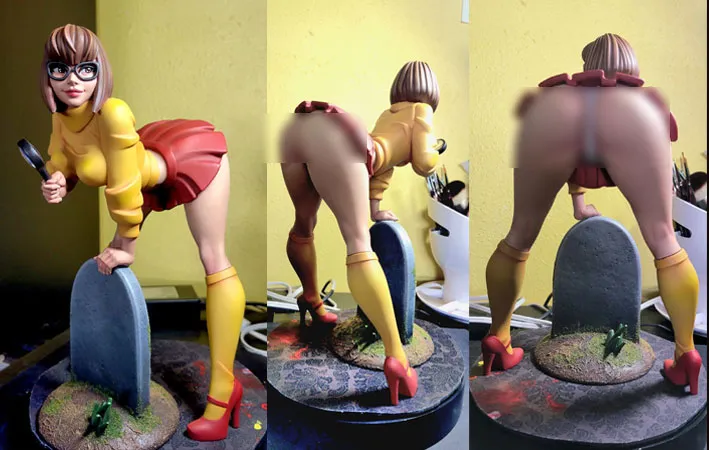
The eternal discussion about where art ends and p0rn0graf1a begins is especially complex in the world of erotic 3D modeling. Is it art when it seeks to explore the sensuality of the human body? Is it p0rn0graf1a when it depicts an explicit scene with a purely sexual focus? Or is it a combination of both elements depending on the creator's intention and the viewer's perception?
Art as aesthetic exploration
In many cases, erotic 3D modeling is presented as a form of digital art. Artists explore proportions, textures, postures, emotions and anatomical details to create works that seek to convey beauty, desire or even a deeper message about human nature. Some of these models are inspired by classic works of art, such as Renaissance sculptures, mythological figures or stylized portraits.
For example, the work of the artist Jean-Michel Bihorel explores female forms in natural settings, and although she is not overtly erotic, she plays with the sensuality of the human body. Another example is the artist Lainey Molnarwho uses digital models to represent female diversity and sensuality.
When the purpose is purely sexual
At the other extreme, there are 3D models clearly oriented to sexual consumption. These models usually present explicit postures, exaggerated proportions and an aesthetic that prioritizes direct visual pleasure. In these creations, artistic intention takes a back seat, the main objective being to provoke arousal in the viewer.
Many creators share these models on specific platforms such as DLsite, Renderhub or private forums where the community searches for NSFW (Not Safe For Work) content.
The fine line between art and p0rn0graf1a
The difference between art and p0rn0graf1a often lies in intention and context. For example, a classical sculpture such as the David of Michelangelo or the Venus de Milo are indisputably works of art, despite their nudity. However, if a work is explicitly designed to titillate, such as a hyperrealistic figure of a model in an explicit pose, it is often categorized as p0rn0graf1a.
But what if a 3D model can do both? Can an erotic figure have artistic value and also be an object of sexual desire?
The answer is complex, and will depend on both the creator's intention and the audience's interpretation.
The view of society and culture
We cannot forget that the perception of erotic 3D modeling is also influenced by social and cultural values. In some cultures, artistic nudity is widely accepted, while in others it is considered taboo or even illegal.
Además, las plataformas y redes sociales imponen sus propias normas: lo que es arte para unos, puede ser «contenido inapropiado» para otros.
Conclusion: A technology that reflects more than it shows
Erotic 3D modeling is, at heart, a mirror of our society: it reflects our desires, our fears, our contradictions and our cultural debates. It is not an innocent technology, nor a purely artistic or purely pornographic expression.
It is a powerful tool that, like all tools, depends on how it is used and who uses it.
Is it art, is it p0rn0graphy, is it both? Perhaps that is not the right question. Perhaps the important thing is to recognize the impact this practice has on the representation of the body, sexuality and individual freedoms in the 21st century.
3D printing has democratized content creation, allowing anyone to shape their fantasies, ideas or artistic expressions from home. But that same freedom also brings with it ethical, legal and social responsibilities that we are still learning to manage.
What do you think?
Do you think 3D erotic modeling should be considered art, p0rn0graf1a or something else entirely?
Do you think it should be regulated, or do you prefer it to be completely free?
Have you already printed or modeled a figure in this style? How was your experience?
💬 Leave us your comment down here. At 3dprinting.website we encourage responsible and respectful debate. Your perspective can enrich the conversation.
If you want to explore more about this type of content or want to create your own models, we invite you to follow us and register to access resources, tools and exclusive discussions.




Responses