
Post-Apocalyptic 3D Printing: What objects would be key to your survival?


This site is supported by its readers, and we may receive commissions if you purchase products through our links, at no additional cost to you. More information..
Imagine this scenario: society collapses. Supermarkets are empty, hospitals no longer function, and access to basic tools is a luxury of the past. Amid the chaos, Would you have the capacity to manufacture what is necessary for your survival?
This is where survival and 3D printing comes into play. Not as a science-fiction concept, but as a tangible reality which has already proven its value in real crises:
- Ukraine 2022-2024: Volunteers printed Turnstiles, drone adapters and spare parts when factories could not supply the demand.
- Remote areas: Communities without access to spare parts have manufactured critical parts to keep machinery running.
- Preppers (survivalists): They are already storing STL files of key tools, from water filters to makeshift security systems.
But how far can a 3D printer really take you in a lawless world? This article is not a dystopian fantasy: we analyze real objects, existing designs and ethical limitsfrom survival tools to the contentious debate on the home-printed weapons.
Get ready to explore:
✅ What you can print TODAY to be ready in a crisis (and where to find it).
⚠️ Legal and practical risks of relying on plastic in an extreme scenario.
🔥 The ultimate controversy: Should certain 3D designs be banned... even if they could save lives?
If you think a 3D printer is only for toys and figurines, this article will make you reconsider. Keep reading... because when the system fails, your maker skills could be your greatest asset.
(Do you already have your own designs for the end of the world? Share your ideas in the comments!)
Can 3D printing save us in a post-apocalyptic world?
En un escenario de colapso social, donde las cadenas de suministro desaparecen y el acceso a productos básicos se vuelve imposible, ya sea por un colapso económico, un desastre climático, una guerra o una pandemia irreversible, 3D printing could become one of the most valuable technologies for survival..
But Is it really viable to depend on it? Analizamos los pros, los contras y los desafíos de convertirnos en «supervivientes digitales».
Digital self-sufficiency as a new form of survival
3D printing could become the secret weapon of post-apocalyptic survival, but with conditions.
This technology allows manufacture everything from tools to medical spare parts on demand, sin depender de fábricas o cadenas de suministro. Es el sueño de todo «prepper»: convertir archivos digitales en objetos físicos cuando el mundo exterior deje de funcionar.
However, this self-sufficiency has an Achilles' heel. Requires constant electricity, printing materials and technical expertise which could become scarce in a prolonged crisis. In addition, without the internet, accessing new designs would be impossible, making it crucial to have a library of previously stored files.
The real advantage of 3D printing is not to replace all survival skills, but to complement them. Its value is in keeping critical equipment up and running through customized spare parts when there is no other option. In a collapsed world, those who master this technology will have a distinct advantage... as long as they can keep their printers running.
Is it the ultimate solution? No. A powerful tool in the right hands? Absolutely. The real question is: will you be among those who know how to use it when it all comes crashing down?
What if you had no access to stores or logistics?
Imagine that, from one day to the next no Amazon, no hardware stores, no spare parts. Factories are closed or destroyed, money loses value and only barter matters.
Empty shelves are no longer a movie picture. With no official spare parts, the last screw in your generator is lost in the dust and it is now up to you to manufacture its replacement. This is the harsh reality where 3D printing goes from being a hobby to a matter of life and death.
In this scenario, survival does not depend on how much money you have, but on how much you can afford. manufacture on your own. And all of that can be in a hidden folder inside a USB flash drive, ready to use, including without internet connection. Because STL files don't need Wi-Fi to save you.
What you COULD do (with a 3D printer and basic knowledge):
✔ Repair broken objects (tool handles, gears, vehicle parts).
✔ Making improvised tools (knives, fishing tackle, pulleys, traps).
✔ Create basic medical equipment (splints, adapted syringes, simple prostheses).
✔ Produce components for alternative energy (solar panel supports, wind generator parts).
What you could NOT do (or it would be extremely difficult):
✖ Printing complex electronics (chips, circuits, batteries).
✖ Manufacture objects requiring high strength (functional firearms, heavy load-bearing structures).
✖ Replacing traditional metallurgy (without access to melting, plastic has limits).
When the system collapses, the digital can become physical, and that ability to materializing tools in the middle of the void is what makes 3D printing a key technology for survival.
🔥 The big question: would you be able to keep your 3D printer running?
- Do you have spare parts for the printer itself? (belts, motors, nozzles).
- Can you source or recycle filament? (Melt old plastic for reuse).
- Would you know how to repair it if it broke down? (In a world without internet, there will be no YouTube tutorials).
Those who survive will not be the ones with the most expensive printer, but the ones who know how to repair it with wire and creativity when it fails.
Does your STL library include the files you'll really need, or just the ones that looked interesting in peacetime? The answer could decide your future...
Basic Survival Objects (Realistic 3D Printing)
Plastic becomes hope when the world falls apart. These are the parts that really matter when there are no stores and no spare parts:
Basic knives and utensils (with metal blades and printed handles)
A well-made knife has no replacement, but you can print the exact handle to fit any recycled blade:
- Broken blade of old scissors → printed handle = functional knife.
- Kitchen knife lost → handle adapted for hand saw blade.
You can also manufacture spoons, forks, cups, plates.
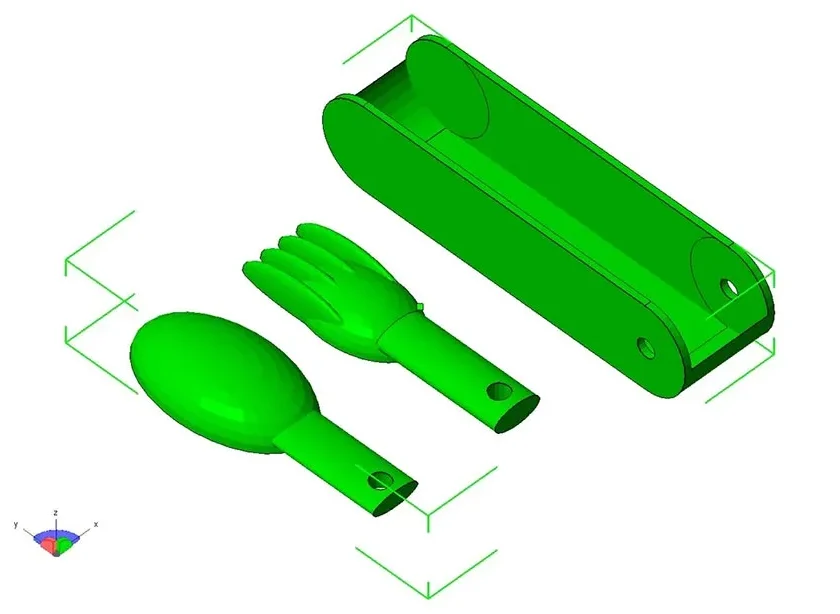
Mechanisms for making fire
El fuego es esencial para cocinar, purificar agua y mantenerse caliente. Cuando se acaban los encendedores y los fósforos, encender fuego vuelve a ser un arte.
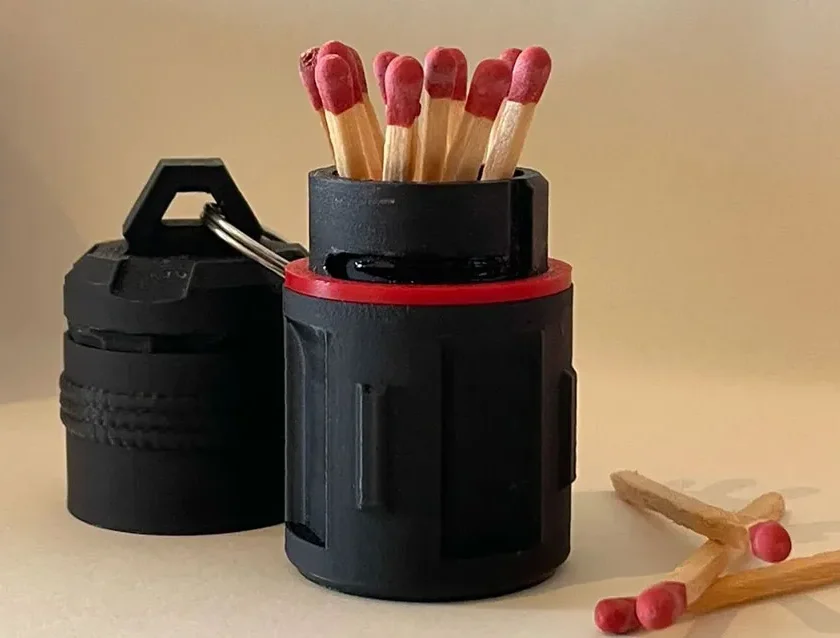
Fire = cooking, heat, light, disinfection.
Saws, wrenches, screwdrivers (heavy-duty components)
- Hand saw handles adaptable to old leaves
- Keys type Allen or English in custom sizes
- Precision printed screwdrivers for repairing small machines or boards
- Levers and wedges for opening sealed doors, lifting heavy objects or dismantling structures
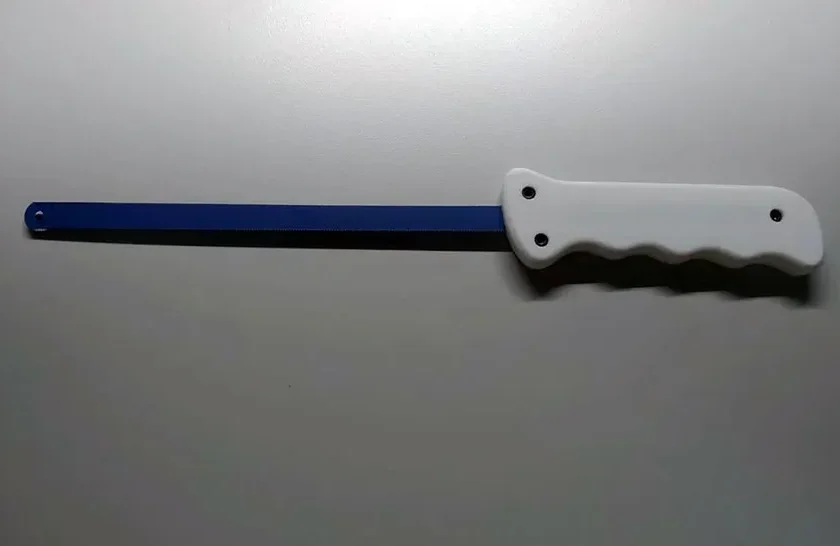
The trick is in the geometry: plastic is not steel, but with thick walls, internal reinforcements and technical filament (such as PETG or carbon fiber reinforced), you can print parts that withstand real use.
Bows, crossbows and holsters: what you are allowed to design without breaking the rules
We are not going to talk about firearms or encourage the design of illegal components. But hunting tools and handmade defense tools have their legal and functional space:
- Simple bows with printed structure and recycled elastic rope
- Low power crossbows, useful for defense or fishing.
- Knife sheaths, blade holders, non-slip grips
- Mechanical traps for small animals
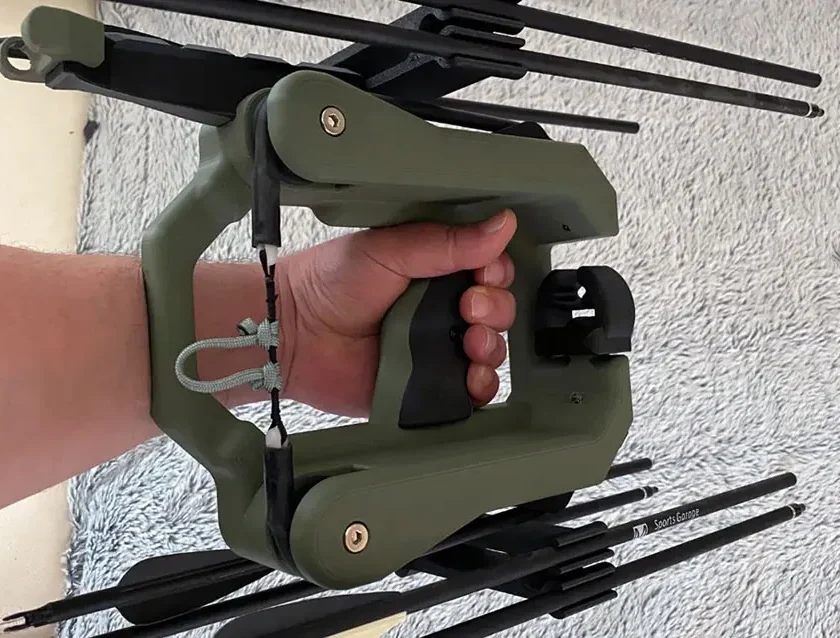
These parts are legally available in many STL file libraries. The difference is in the usage and context.
📌 Important note: Even if the printing is legal, the use may not be. What in a post-apocalyptic scenario is common sense... today could be criminalized. But it's not about preparing to break the law, but to survive when there is no law to enforce.
3D printed food and water purification systems
In a scenario where mains water no longer runs and supermarkets are empty, survival depends on how you obtain, purify and cook your food..
3D printing can give you a silent but vital advantage: simple, functional and replicable tools, without the need for complex technology.
Homemade filters for water purification (printed filter holders)
Contaminated water kills faster than hunger. And you don't need viruses or radiation: if a stream is dirty or a well has bacteria in it, you could be sick in a few days.
What you can 3D print:
- Universal filter holders: adaptable to PET bottleshoses or buckets.
- Multi-stage systemsA printed design can contain layers of activated carbon, sand, cloth and pumice.
- Ceramic or UV filter holdersIf you manage to get the purifying element, you can print the rest.
- Caps with interchangeable nozzlesto convert a common bottle into a filtering canteen.
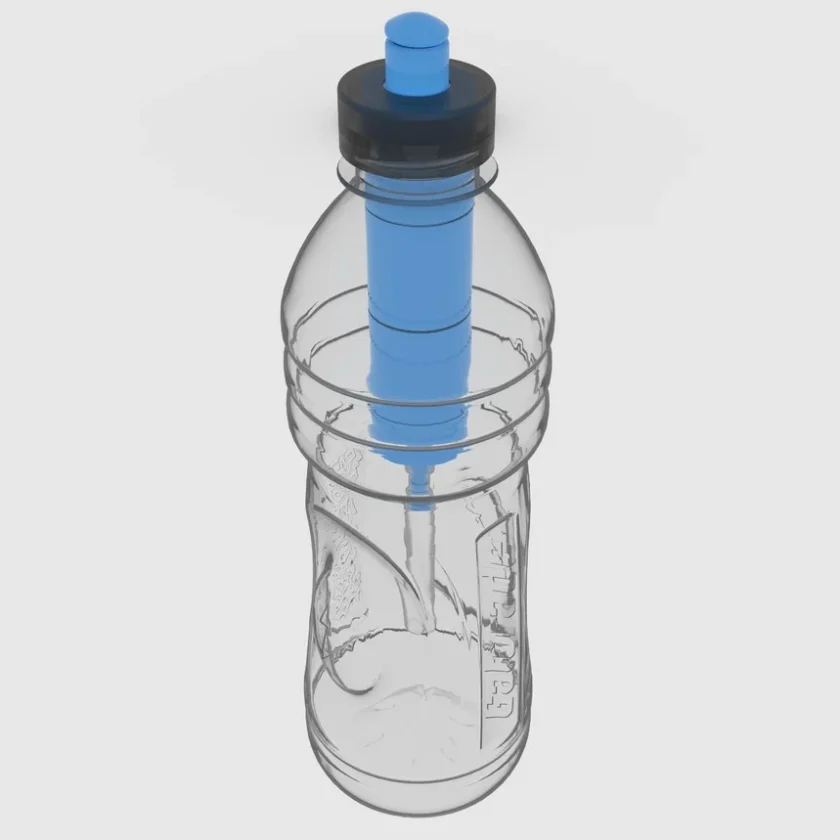
The secret is not only in the design. It's in store as of now the filter components. But you can print the filter body as many times as necessary.
Traps for hunting or fishing (cages, nets and baits)
Without supermarkets, the protein does not come packaged. It comes with legs, fins or claws.
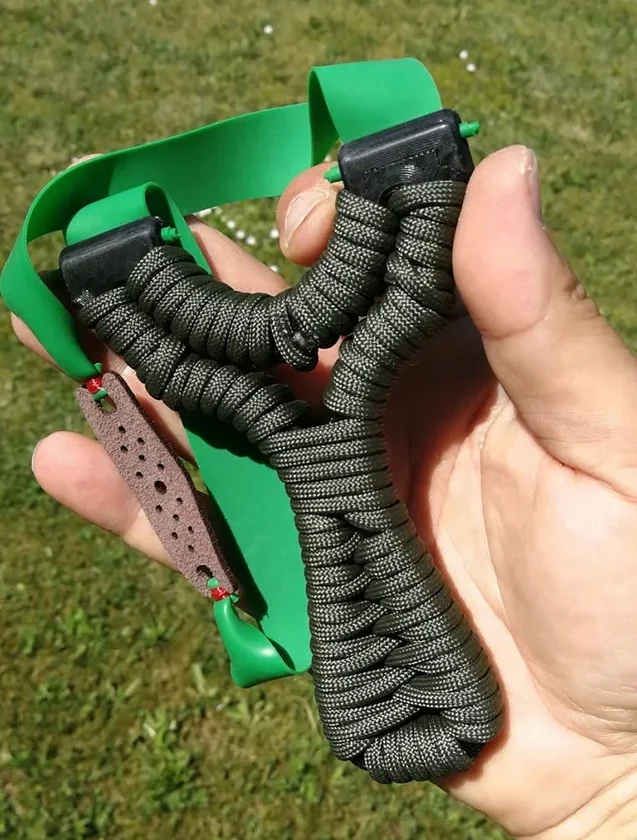
Makers are already designing:
- Cages for small rodents or birdsbased on drop or pressure mechanisms.
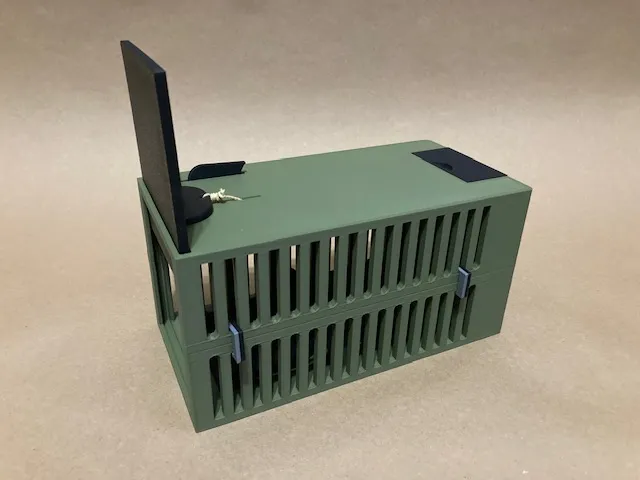
- Floating primers to attract fish, connectable to homemade nets.
- Hook supportsautomatic fishing lines or nozzles for homemade spears.
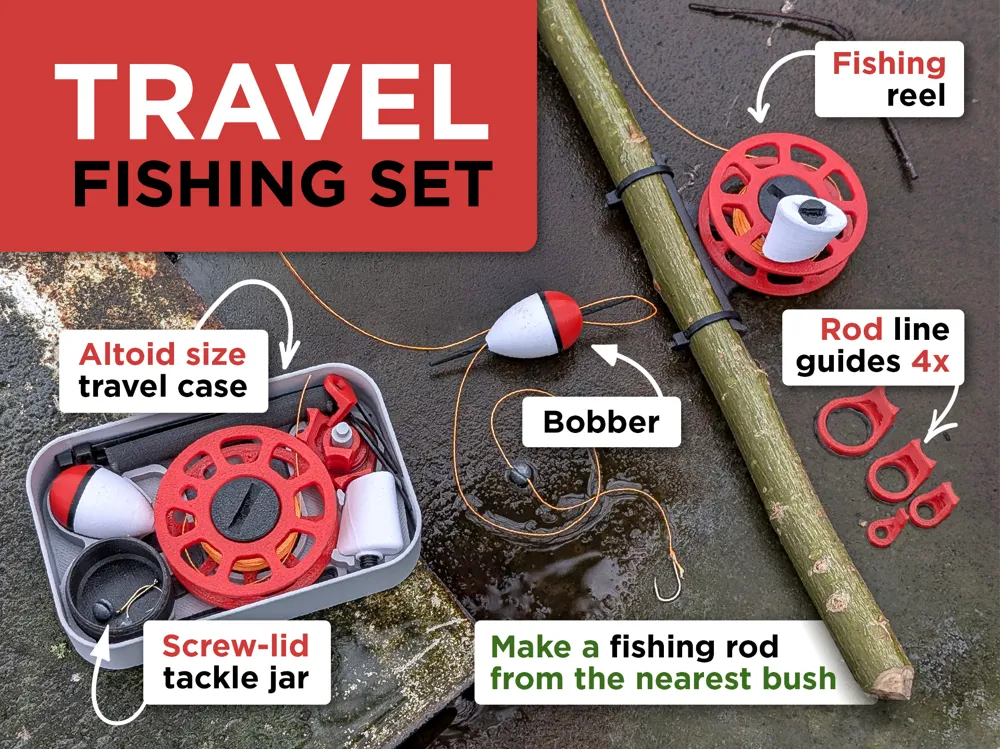
- Insect collection devicesan underestimated but vital source of protein.
The best thing: you can use scraps as bait. And if it breaks, you print it again. No metal. No nails. Just design and ingenuity.
3D printed modular hydroponic systems
When growing in soil is no longer an option - due to pollution, lack of space or extreme weather conditions - hydroponic systems become a vital solution. And yes, much of their structure can be 3D printed: tubes, connectors, pots, supports, even valves or parts adapted for recycled water pumps.
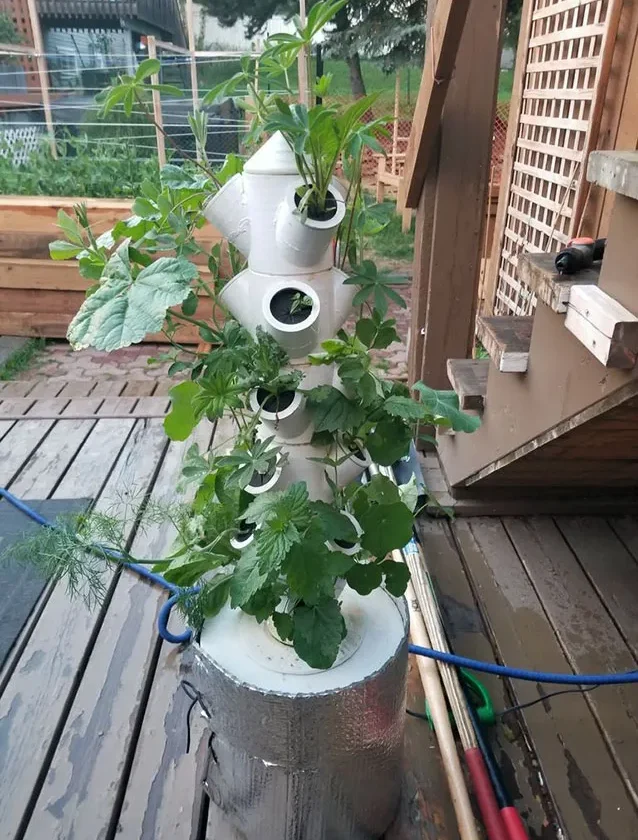
A 3D printer can help you assemble a system completely modularThe planting system, adapted to any available space: from a basement to a makeshift rooftop. If you can maintain a closed water cycle with nutrients and seeds, you can grow staples such as lettuce, spinach, basil or even cherry tomatoes.
Key advantages:
- Water reuse (ideal in areas with water scarcity).
- Total control of the growing environment.
- Low maintenance once assembled.
In a world where every calorie counts, a printed mini hydroponic vegetable garden could make the difference between survival and starvation.
Shelter, defense and organization: the 3D printed post-apocalyptic home
When everything falls apart, your home is no longer an address: it is any place where you can close a door and sleep without fear..
3D printing can help you build and secure that space, even if it's made of tarps, old wood or abandoned containers.
Modular pieces to build improvised shelters
The real value is in have a structure, shade, insulation and something you can assemble and disassemble.
What you can print:
- Pole and pipe fittings: allow you to build structures using sticks, metal pipes, bamboo or whatever you can find.
- Giant LEGO-type connectorsmodular parts that can be assembled without tools.
- Roof supports and coveringsadaptable to tarpaulins, thermal blankets or sheets.
- Large hinges, handles and bracketsto turn any plank into a functional door.
Everything fits in a backpack. And you can replicate it with precision. Because a shelter does not need to be beautiful: it needs to resist rain and fear..
🔐 3D-printed padlocks and mechanical locks
Would you trust your security to a padlock printed on plastic?
In a world without locksmiths, yes.
- Mechanical combination locksno need for keys, only codes.
- Reinforced latches with pressure or rotary locking mechanisms.
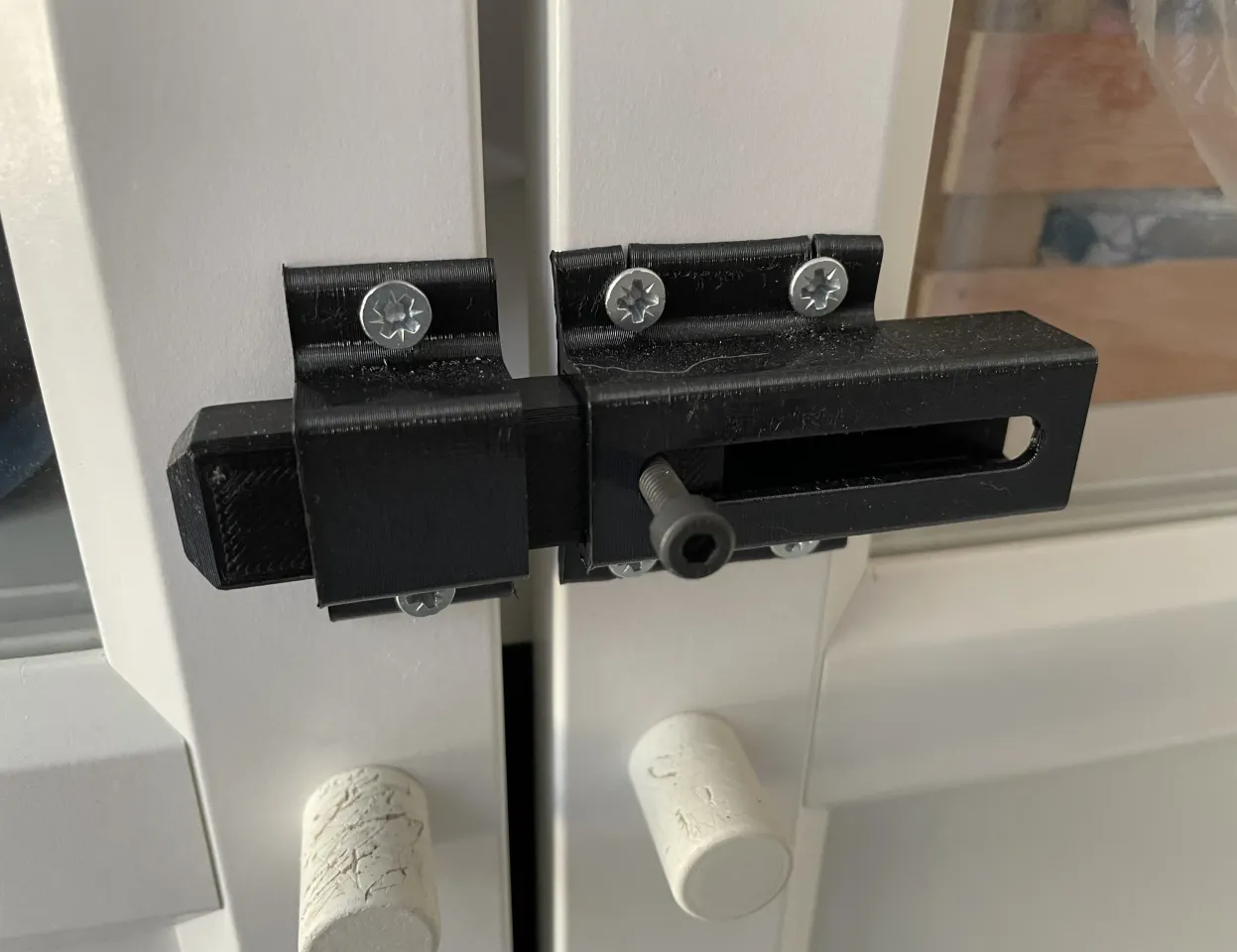
- Closures for boxes, backpacks or hidden compartments.
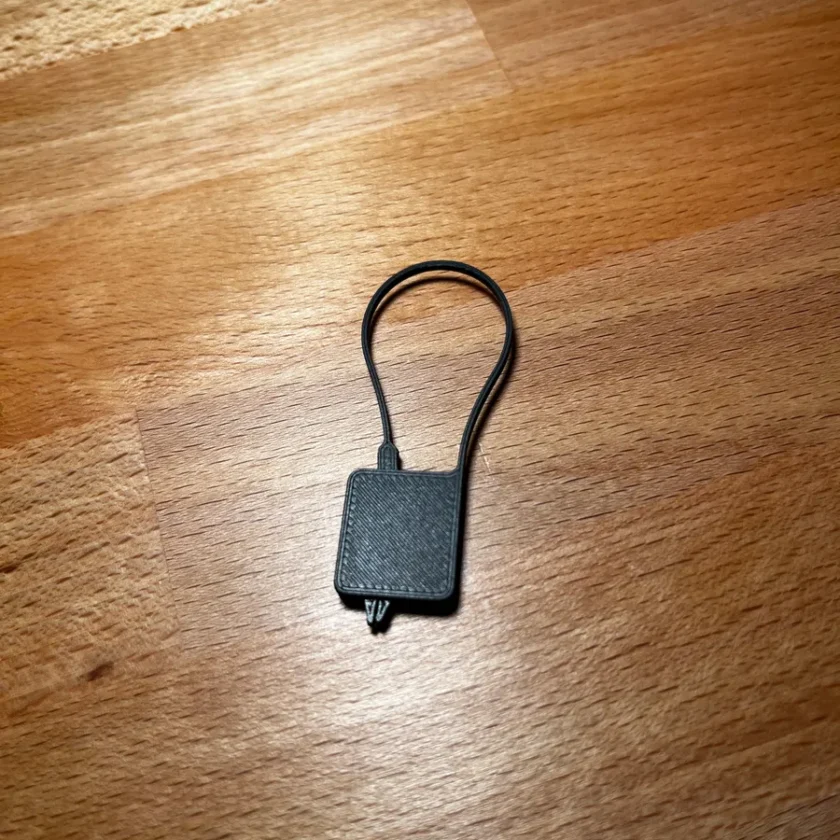
- Reverse or delayed opening systemsto avoid shortcuts.
It is not about being invulnerable. It is about place obstacles that give you valuable seconds to escape or respond.
Barriers, hooks, latches, simple mechanical traps
Plastic does not stop bullets, but may delay, confuse or make noise.
- Hidden hooks that release things when you step on them.
- Traps with pulley or tension systems for small animals (or intruders).
- Light barriers with "spike" shapes or structures that discourage passage.
- Stands for lights, improvised alarms or visual signals.
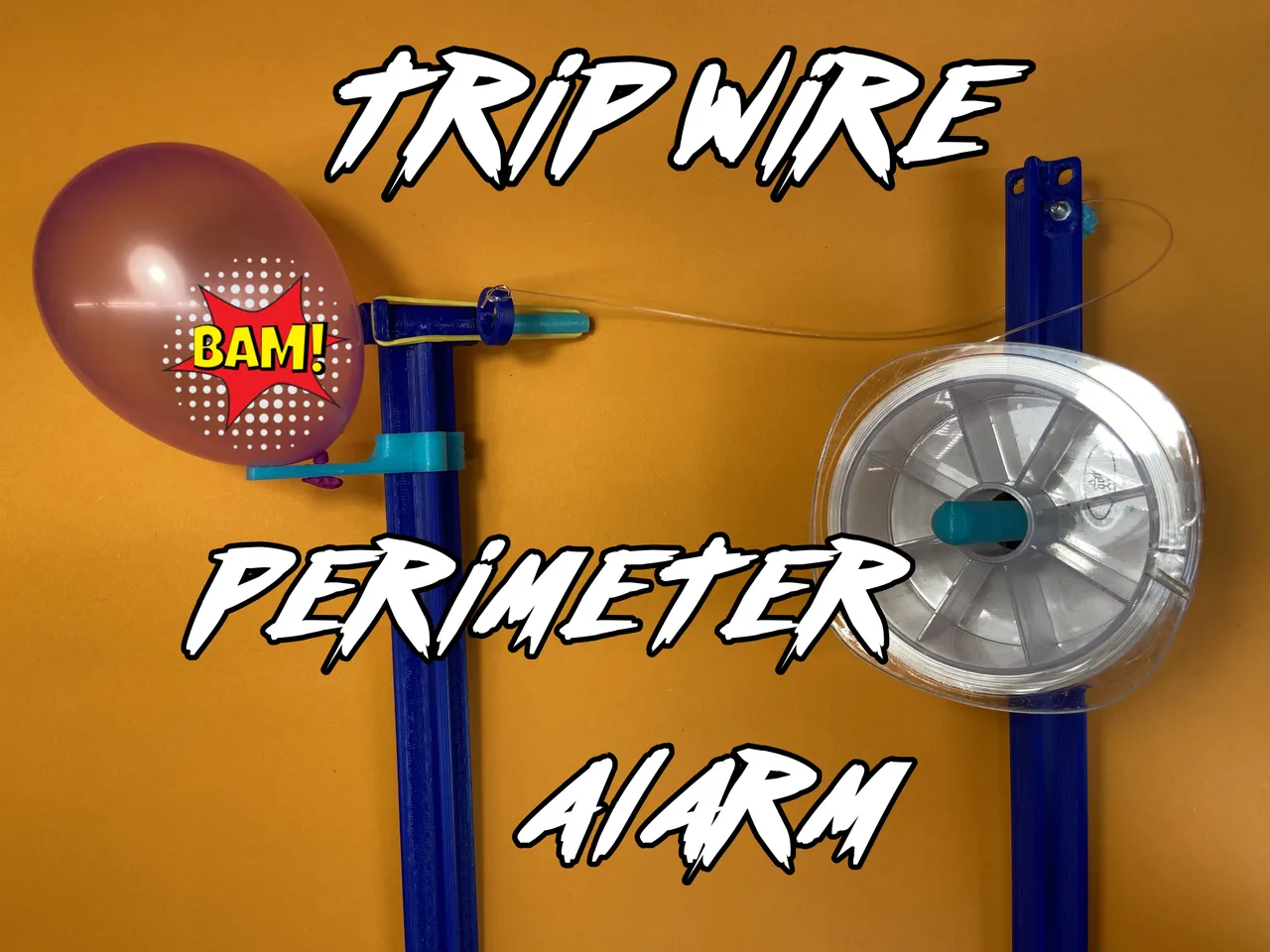
Even if you don't print the complete trap, you can manufacture the most difficult partthe trigger, the base, the mechanism. The rest, you assemble it with ropes and branches.
Replacement parts and essential repairs
When there are no stores, repairing is more important than buying.
And repair means having the exact part... or the ability to print it.
A 3D printer can be the invisible mechanic who works at night, without pay, without complaining.
But only if you have the right designs.
Bicycle parts, tools, generators and more
- Gears, timing belts, sprockets, plastic bearings.
- Handles for hammers, axes, screwdrivers.
- Levers, handles, hinges, supports for electric generators.
- Pedals, pannier racks and fenders for bicycles.
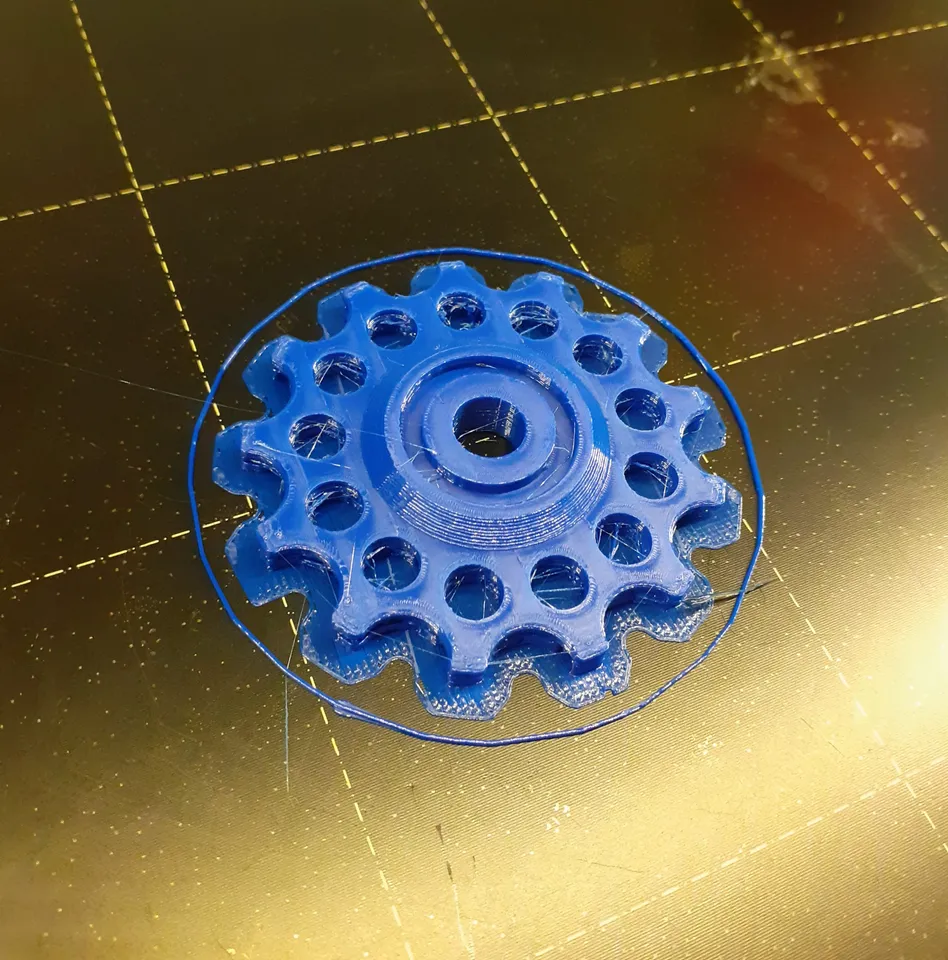
A single broken part can leave you stranded. A loose wheel can cost you a leg.
Printing it can be the difference between moving forward or getting stuck.
Universal adapters and connectors
Not everything can be replaced. But you can make incompatible parts work together.
- Hose adapters, filters, valves.
- Connectors for different pipe gauges.
- Supports and couplings for solar panels or improvised chargers.
- Connectors for different types of plugs or cables.
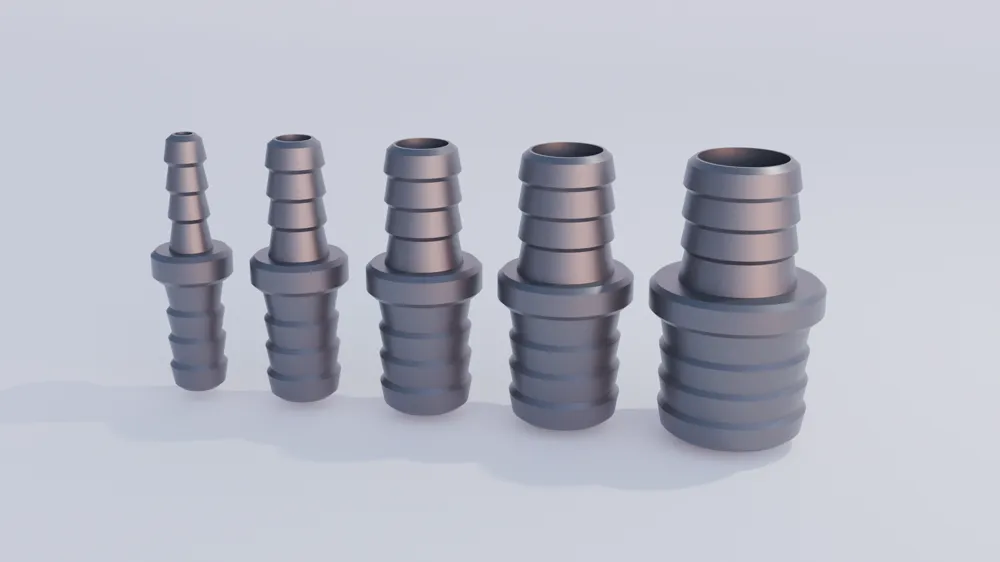
Plastic does not transmit electricity and does not withstand a lot of pressure, but is perfect for joining things together that you might not otherwise use.
Basic prosthetics and printed orthopedic supports
A fall, a badly healed wound, a broken joint. In a world without doctors, even a fracture can be a sentence.
With 3D printing you can manufacture:
- Customized, lightweight and ventilated splints.
- Supports for ankles, knees, wrists.
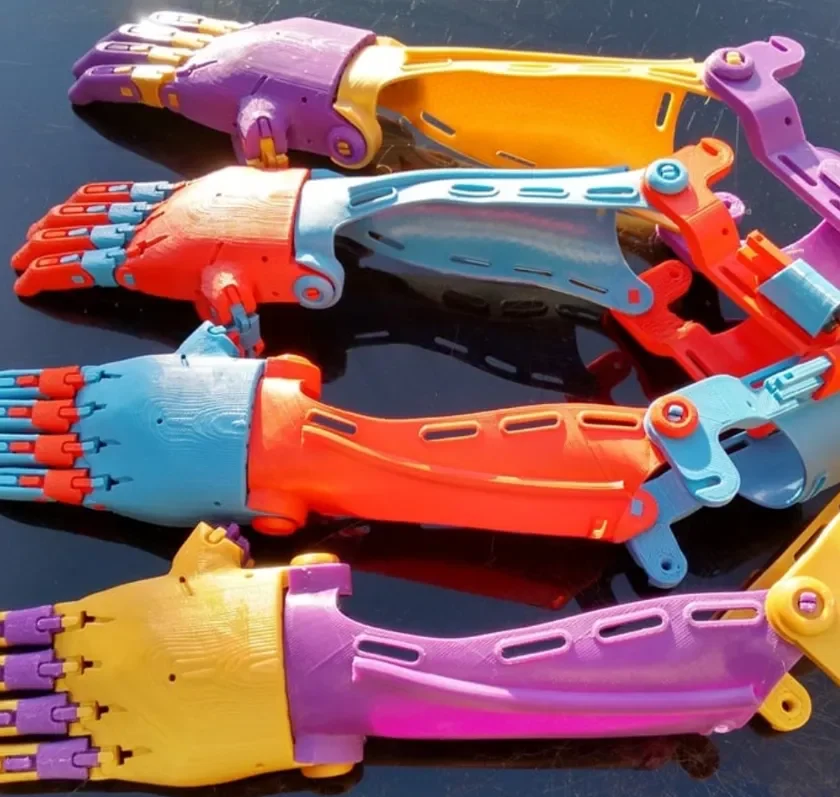
- Basic prostheses for fingers, hands or feet.
- Assistive devices such as clamps, grips or canes.
Technology, energy and communication: how to manufacture key components
It is not enough to have food or shelter. No energy, no information, no contact with others... you are isolated.
3D printing does not generate electricity, but it does enables the fabrication of the supports, structures and adapters that keep the technology running.
🛸 Simple drones for reconnaissance (printed structure)
In hostile territory, knowing what's beyond the hill can save your life.
- Lightweight quadcopter type drone structures.
- Recycled camera mounts or ESP32-CAM modules.
- Printed parts for casings, experimental propellers, guards and landing gear.
With basic components and recycled motors, you can create a handcrafted reconnaissance droneuseful for:
- Explore dangerous areas without taking risks.
- Monitor the perimeter of your shelter.
- Search for people or signs of life.
In a post-apocalyptic world, even an aerial image can be worth more than a gun.
☀️ Mounts for solar panels, wind generators, small turbines and chargers
A charged battery can be the difference between having light or walking blind.
But no structure, no assembly, no wind or sun direction.... is of no use.
- Printed brackets for tilting solar panels at optimum angle.
- Bases for wind generators made from recycled alternators.
- Printed propellers for low power turbines.
- Housings and structures to transform old engines into generators.
- Charging stations with USB ports and home regulators.
Power doesn't just come from the panels... it comes from your ingenuity.
🔋 Battery boxes and enclosures for recycled electronics
Old batteries, 18650 cells, powerbanks that are no longer sold.
All of that can be recovered. But it needs a safe and functional container.
- Housings for reused battery banks.
- Boxes with slots for fuses, switches and cables.
- Plastic insulators between cells, to avoid short circuits.
- Modular organizer for recycling electronic components.
You will not print lithium, but you can print what you need to use it well.
Weapons and self-protection in 3D printing: what is legal and useful?
In a world where rules collapse, personal protection becomes a basic necessity. But even in extreme scenarios, the line between what is useful and what is illegal remains important.
3D printing can be your ally to defend yourself, without crossing legal or ethical boundaries. It's not about printing functional guns: it's about surviving with what you can and should.
🏹 Bows, slings and batons: what is permitted and useful.
No need for gunpowder or modern ammunition. They are primitive weapons, legal in most legislations... and fully functional.
- Compact bows with 3D printed body and flexible arm made of wood or fiber.
- Precision slingshots with ergonomic printed handle and recycled elastic bands.
- Defense batonsThe new products are lightweight, hollow for storage, or even with concealed compartments.
- Handmade dartswith printed parts and mechanical power, useful for small game hunting or defense.
An arrow does not need a cellular network to work. Just skill, and the correct STL file.
🔪 Holsters, cases and knife holders
Even a simple kitchen knife can be key in a melee... but if you don't carry it safe and ready, it's a danger for you.
- 3D printed sheaths for knives or machetes.
- Fastening clips, straps, belt holsters.
- Rigid cases for multipurpose tools or defense elements.
- Printed concealment devices (false compartments, camouflaged tubes, etc.).
3D printing may not give you the gun... but it can give you control over it.
⚠️ Visual and psychological deterrents (fake projectiles, non-lethal traps)
Defense does not always require violence. Sometimes it is enough to sow doubt or fear. to avoid conflict.
- False Grenades or realistic-looking projectiles.
- Visual traps: false spikes, spikes, printed warning notices.
- Intimidating objects as masks, figures or protective totems.
- Signage to mark territoriesto warn of traps or simulate mined areas.
Things we could design today for a collapsed future
Not everything that could save you is designed yet. At this moment, you could be creating the difference between chaos and organization..
Design today, store today, print tomorrow. That is the philosophy of the digital survivor.
Mini stills, hand pumps, rain water collectors
Drinking water will be more valuable than gold. Y complex purification systems will be out of reach.
- Mini solar or waste heat stillswith printed structure for water distillation.
- Suction hand pumpswith printed bodies and recycled rubber valves.
- Rainwater harvestingmodular funnels, modular funnels, gutter connectors and tent structures.
- Solid separatorsThe new filtering system, interchangeable primary filters and pre-filters, all printed and mountable without tools.
Designing how to move and filter water today can mean the difference between getting sick or living tomorrow.
Modular prostheses, hygiene elements, medical kits, etc.
Wounds become infected. Limbs are lost. And if there are no hospitals, the ability to provide the basics can keep many people alive..
- Simple prosthesisfingers, wrists, modular splints.
- Mobility aid componentscanes, foot supports, stabilizers.
- Hygiene utensilsThe following products are available: toothbrushes, paper towel holders, soap holders and reusable menstrual items.
- DIY Medical KitsGauze holders, dosing spoons, forceps, adapted masks, guide tubes.
🎻 Musical instruments, games and objects to maintain morale.
The apocalypse also passes through the mind. Hopelessness kills slower... but just as surely.
- Musical instrumentskalimbas, ocarinas, simple flutes, drums with printed bodies.
- Printed board games: dice, tokens, modular boards.
- Toys for children: figures, blocks, puzzles.
- Symbolic objectsProtection statuettes, crosses, totems and amulets.
Keeping morale high is not a luxury. It is emotional survival.
Conclusions: Could you really survive on 3D printing alone?
When all else fails, it's not what you have that counts... but what you can manufacture.
A 3D printer in a collapsed world is more than a gadget. It is a portable factoryThe system is silent, precise and capable of converting bits into useful objects.
We are not talking about science fiction: we have already seen concrete examples in armed conflicts, isolated areas and real medical emergencies.
Where others see a limitation, the maker sees an opportunity for creation. And that power, multiplied by a community that shares files and solutions, is more resilient than any traditional supply chain.
It's no longer just about doing useful things. It's about survive with creativity, collaboration and open source.
Practical constraints: electricity, maintenance, shortage of materials
Could you survive only with 3D printing?
No.
No electricity, no plastic, no electronic components... a printer is just an empty casing.
- Do you have a sustainable energy source?
- Do you know how to maintain your machine without external help?
- Could you recycle and extrude your own filament?
These are the questions that separate the fantasy from the real survival plan.
🧩 Final reflection.
3D printing is not a magic solution, but it is a powerful tool in prepared hands.
You don't have to wait until the world collapses to start preparing. True resilience is not built in the midst of chaos, but much earlier, when you still have electricity, internet and access to materials.
This is the time to practice, to learn how to repair your printer, to build your library of useful STL files, to experiment with filament recycling and alternative energy.
Every tool you print today - even if it seems unnecessary in peacetime - can become vital tomorrow. Because when all else fails, you won't have time to learn from scratch.
The difference between being ready or depending on others is defined now, in every impression you make while the world is still functioning.
Join the Debate: What would you print to survive the end of the world?
In a world where stores no longer exist and everything depends on your ability to manufacture the essentials, community can make the difference between survival and surrender.
In 3dprinting.websitewe do not only share tutorials and guides: we create collective knowledge for those who believe that 3D printing is not just a hobby... but a real power tool.
This is your space to share, debate, learn and teach.
📝 Leave a comment with your list of impressions for survival
Which objects do you think are essential in a 3D survival kit?
Do you have a selection of downloaded models in case "everything goes to hell"?
Tell us in the comments and join the conversation.
Your idea can inspire others.
Join the forum and discuss 3D printing in extreme scenarios
Are you interested in digital prepping, do you want to debate the ethical limits of printing weapons, medical technology or defense tools? The forums of the site are open.
There we discuss with respect and depth, like adults. There are no forbidden topics, only curiosity and shared responsibility.
📤 Share useful models or ideas with other members of the community
If you have a design of your own that can help others to survive - a trap, a portable kitchen, a water filter or even a shelter organization system - you may be able to create your own design. upload it to the community and share it.
Every useful STL file you upload can make a difference to someone else.
🛠️ Participate by creating courses or design projects for digital preppers.
Do you know how to use Fusion 360, Tinkercad, FreeCAD or other modeling software, do you want to teach others how to prepare their own tools for critical scenarios?
Did you know that you can create your own course within the site?From simple designs to complete modular systems.
We are already preparing an exclusive section for preppers and survival makers.
🔥 When it all collapses, you won't be alone.
If you are part of this community, you will have access to knowledge, to people who share your vision and to tools that could change everything.
👉 RegisterParticipate, upload your ideas.
The end of the world doesn't have to be the end of your creativity.



Responses