
3D Printing in 2026: Which Materials Will Dominate the Industry This Year?

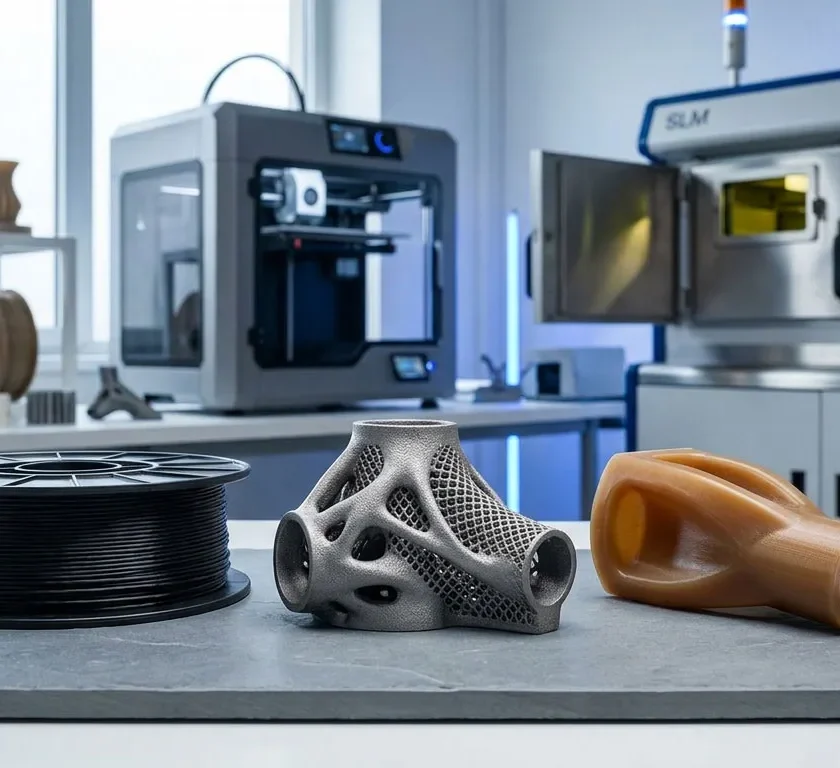
The landscape of additive manufacturing has undergone a radical shift, and understanding what the 3D printing materials 2026 is essential for any professional who wants to remain competitive in the industry.
This year, the industry has shifted its focus away from aesthetics alone to prioritize high-performance polymers and metal alloys that enable functional applications in extreme engineering environments. From the consolidation of reinforced filaments to the democratization of titanium, the materials ecosystem is redefining the limits of what we can manufacture from a desk or through specialized industrial services.
If 2024 and 2025 were the years of speed, 2026 is undoubtedly the year of chemical and mechanical properties. We no longer print just to see how a design looks; we print so that the part can perform under real-world conditions of temperature, friction, and load.
The Era of High-Performance Polymers
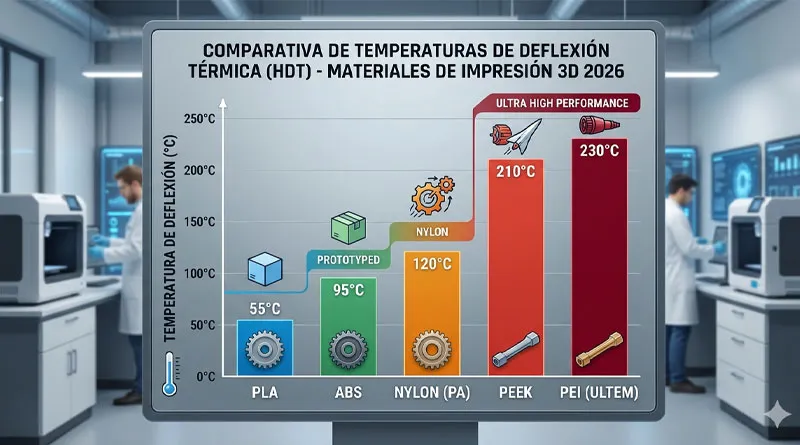
In 2026, the 3D printing materials 2026 have moved beyond rapid prototyping to fully embrace the production of final parts for critical applications.
The dominant trend this year is the shift toward high-performance polymers, a family of thermoplastics that maintain their structural integrity under conditions where ABS or PETG would simply fail.
These materials are notable not only for their strength-to-weight ratio, but also for their ability to operate in chemically aggressive environments and at constant temperatures exceeding 150°C.
Expertise in PEEK and PEI (Ultem)
PEEK (polyether ether ketone) and PEI (polyetherimide) have established themselves as the go-to materials for engineers seeking to replace metal components. In the current context of 2026, their widespread adoption is due to:
Low outgassing: A key feature that has led to its widespread use in the aerospace and satellite industries.
Heat Resistance: They can withstand extreme temperature spikes, making them ideal for automotive under-hood components or electric motor housings.
Biocompatibility: They have revolutionized the medical field, enabling the creation of customized implants and surgical instruments that can be repeatedly sterilized in an autoclave.
Carbon Fiber and Glass Fiber Reinforced Polymers
If anything defines the 3D printing materials 2026 is «hybridization.» We are no longer talking only about pure plastics; the addition of short or continuous carbon fibers has transformed nylon (PA) into a material with astonishing stiffness.
Impact Resistance: Fiberglass-reinforced composites are gaining ground in the manufacture of industrial tooling and jigs and fixtures that must withstand heavy-duty use on assembly lines.
Dimensional Stability: Carbon fiber drastically reduces the warping (warping), making it possible to print large parts with a level of precision that was previously only achievable through CNC machining.
Metals: From Exclusivity to Accessibility
A few years ago, 3D printing with metal was prohibitively expensive. By 2026, new binder technologies and improvements in laser sintering have made steel and titanium more widely accessible.
In 2026, the 3D printing materials 2026 have definitively broken through the cost barrier that previously limited the use of metals to the aerospace and medical industries. Thanks to advances in technologies such as the Binder Jetting and advances in metal-powder-loaded resins for sintering, it is now possible to produce steel or titanium parts at a fraction of the cost required just three years ago.
316L Stainless Steel and Its Use in Final Components
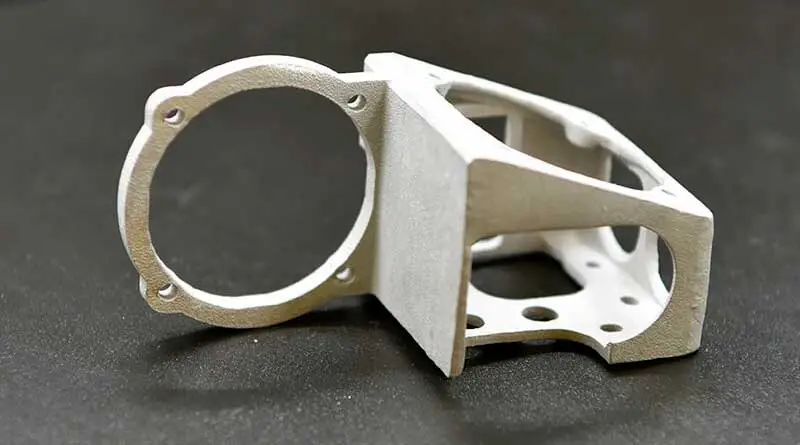
316L stainless steel has become the industry's workhorse this year. Its excellent corrosion resistance and mechanical properties make it indispensable for:
Custom Tooling: Dies and molds with integrated cooling channels—which would be impossible to produce using traditional machining methods—are now being manufactured, thereby improving the efficiency of injection molding.
Critical Parts: The ability to print steel parts on demand is enabling many industrial plants to eliminate their physical spare parts warehouses and switch to «digital inventory.».
Grade 5 Titanium in the Professional Maker Sector
Thanks to improvements in external services, independent engineers can now order titanium parts for high-performance robotics or drone projects—something that would have been unthinkable just five years ago.
The use of titanium (Ti6Al4V) has seen unprecedented growth among independent engineers and startups. By 2026, the 3D printing materials 2026 These types of services no longer require you to be a large corporation to access them.
- Strength-to-Weight Ratio: It is the material of choice for developing high-speed drones and advanced robotic components where every gram counts.
- Integration with External Services: The current trend shows that professionals prefer to design their parts and outsource titanium printing to specialized services that ensure proper thermal post-processing to eliminate internal stresses.
Sustainable and Bio-based Materials
European and global regulations set to take effect in 2026 are pushing companies to reduce their carbon footprint. This has spurred the development of materials that are not only recyclable but also sourced from circular supply chains.
On the list of 3D printing materials 2026, bio-based compounds and circular polymers play a key role. Regulatory pressure and environmental awareness have driven the development of materials that deliver industrial performance without the environmental impact of petroleum-based plastics.
- Second-Generation PLA: By 2026, PLA will no longer be just for «toys.» New compostable formulations offer greater heat resistance while maintaining printability and being made from 100% renewable sources.
- Closed-Loop Recycling: We are seeing a surge in materials made from recovered fishing nets or industrial waste, processed in such a way that they maintain consistent mechanical properties from batch to batch.
The challenge: How can we work with these materials today?
This is where most users encounter their biggest challenge. The materials that dominate in 2026 require cameras heated to over 90°C, high-temperature extruders (450°C+) and industrial post-processing systems that are not always feasible in a home workshop.
Even though the 3D printing materials 2026 offer amazing possibilities, but the technical reality is that most of them require infrastructure that goes far beyond a standard home printer. The PEEK needs cameras heated to more than 90°C, and titanium requires an inert gas environment to prevent oxidation during the process.
Outsourcing as a Strategic Solution
For many professionals, the solution isn't to buy a €40,000 machine, but to outsource production to partners who already have the necessary certified infrastructure.
This is where on-demand manufacturing becomes the ultimate solution.
- Access to Cutting-Edge Technology: By using external services, any designer can access high-end metal printers or SLS systems without the maintenance costs.
- Risk-Free Scalability: You can validate a carbon fiber prototype and move on to a production run of 50 stainless steel parts within the same week.
- Material Certification: Professional suppliers ensure that the material used is exactly as specified in the technical data sheet, which is essential for parts that must withstand real-world mechanical stresses.
Editor's note: This is where Global platforms have made access easier, allowing any designer to upload their file and receive a finished piece PEEK or Titanium with industrial finishes in record time.
Don't have a 500°C printer? Get access to industrial materials today with Justway.com

The reality of the 3D printing materials 2026 is that they require extreme manufacturing conditions. While a standard home 3D printer struggles to reach 300°C, materials like PEEK or Ultem require active heated chambers and extruders that maintain constant temperatures of up to 500°C to prevent structural failures. However, not having this equipment in your workshop shouldn’t hold back innovation in your projects.
The most efficient and cost-effective solution today is to outsource production to on-demand manufacturing platforms. Justway.com It has established itself as the strategic partner for those who need functional parts with industrial-grade finishes, eliminating the barrier of the initial investment in expensive hardware.
Instant access to high-performance materials
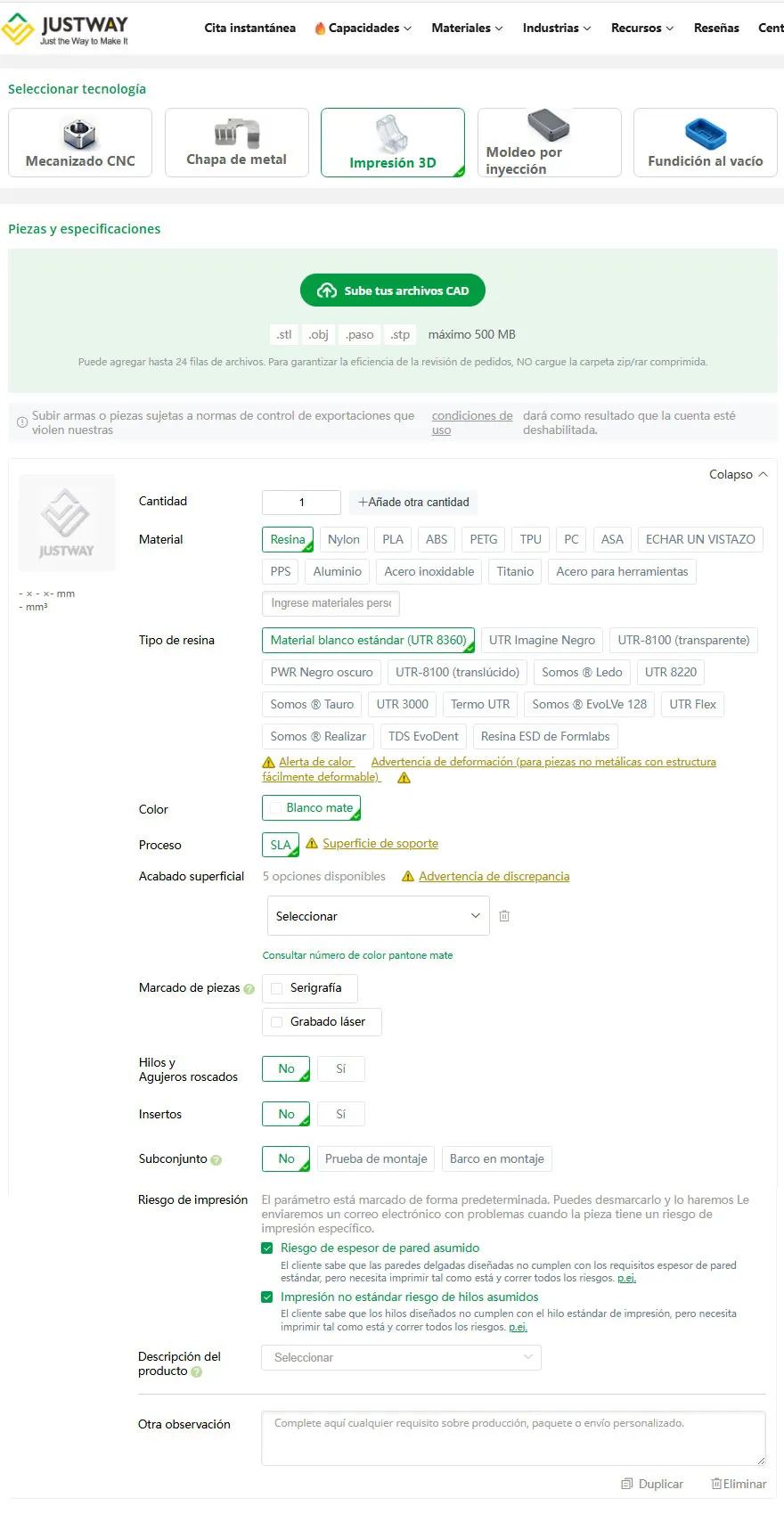
Through Justway, you can take a design from your computer and turn it into a physical object made from materials that were previously out of reach. Whether you need the chemical resistance of PEEK, the structural lightness of the Nylon with Carbon Fiber or the strength of the Titanium, their platform allows you to select the exact material and receive parts with industrial-grade quality certifications.
Guaranteed accuracy and professional post-processing
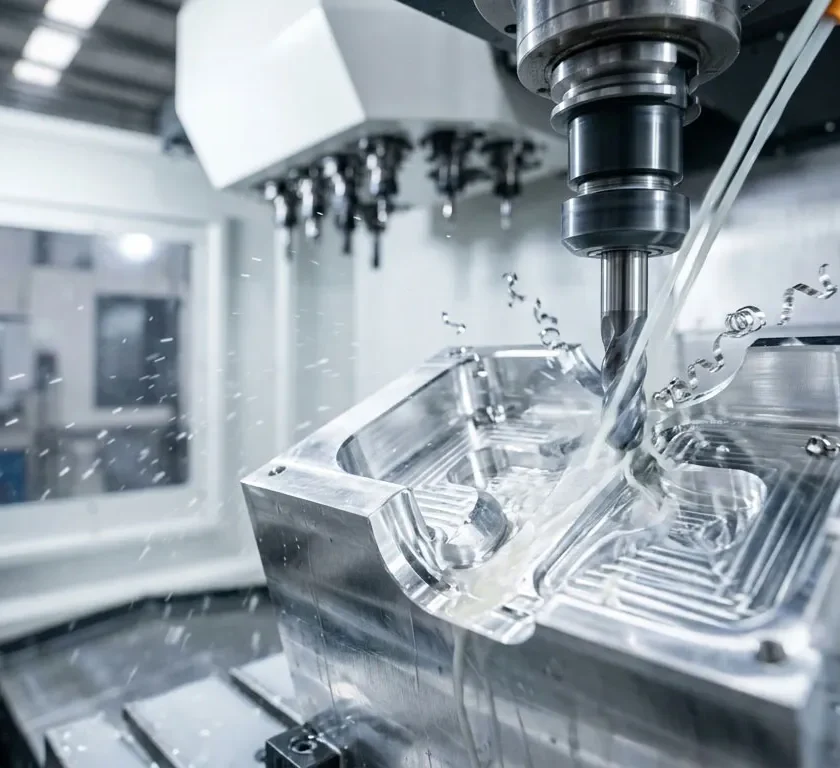
One of the biggest advantages of working with a specialized partner is repeatability. Justway doesn't just offer 3D printing; it also integrates processes for CNC machining and advanced surface finishes that ensure your parts meet exacting tolerances. This is critical when printing components that must fit into complex mechanical assemblies, where even a one-micron difference can compromise performance.
Optimization of costs and delivery times
Justway's instant quoting platform allows independent engineers to compare costs in real time.
- Quick quote: Upload your STL or STEP file and get a quote in seconds.
- Scalability: You can order anything from a single working prototype to small production runs, leveraging our global logistics network to receive your parts in record time.
Conclusion: Design with the material in mind
By 2026, the industry has shifted toward specialization, and understanding the properties of these new materials is what sets an amateur apart from a professional in digital manufacturing.
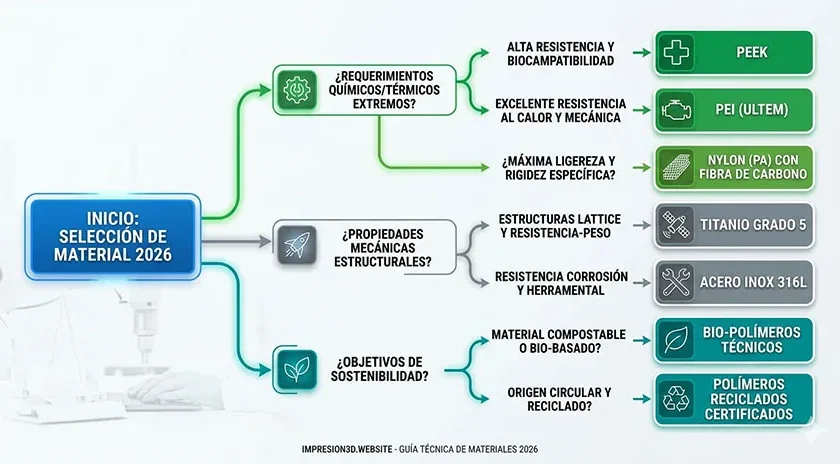
In short, the 3D printing materials 2026 can be summarized under three main pillars: in polymers, the absolute mastery of PEEK, PEI (Ultem), and carbon fiber-reinforced nylon; in metals, the standardization of 316L Stainless Steel and Grade 5 Titanium; and in sustainability, the rise of high-performance circular biopolymers.
We no longer design a part simply to make it «look good»; instead, we select the material based on its heat deflection temperature, elastic modulus, or chemical resistance.
Specialization is the key this year, and knowing when to print at home and when to outsource to a professional service will make all the difference in the profitability of your projects.
Join our community
Which of these materials do you think will have the greatest impact on your industry this year? Have you had the opportunity to work with high-temperature metals or polymers yet?
Leave a comment below on impresion3d.website. We'd love to hear about your projects and help you choose the best technology to bring them to life!



Responses