
Is 3D printing sustainable or are we generating more plastic than we can recycle? Find out how to reduce your impact

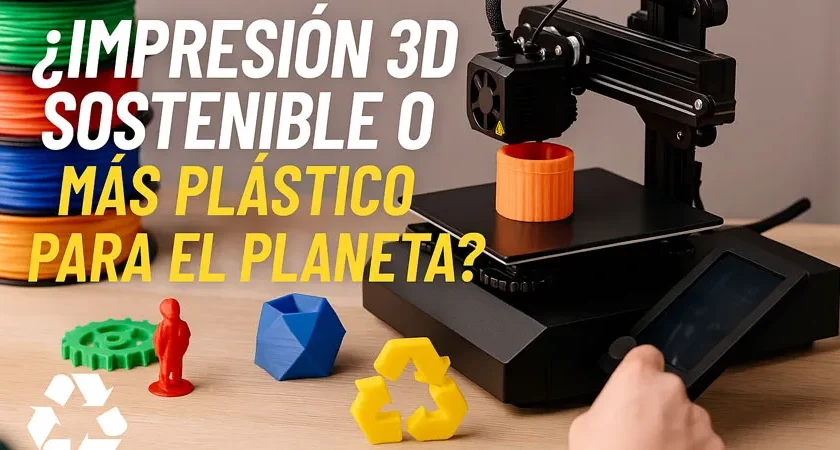
3D printing has been hailed as a revolution in manufacturing, promising efficiency, customization and waste reduction. However, as this technology becomes more accessible and used, a crucial question arises: is it really sustainable or are we contributing to a new wave of plastic pollution?
This article explores the ecological promises of 3D printing and contrasts them with current realities, analyzing their environmental impact and initiatives that seek to mitigate their negative effects.
The green promise of 3D printing
3D printing, also known as additive manufacturing, offers several advantages that position it as a more sustainable alternative to traditional manufacturing methods.
Less transport, less emissions: a real change?
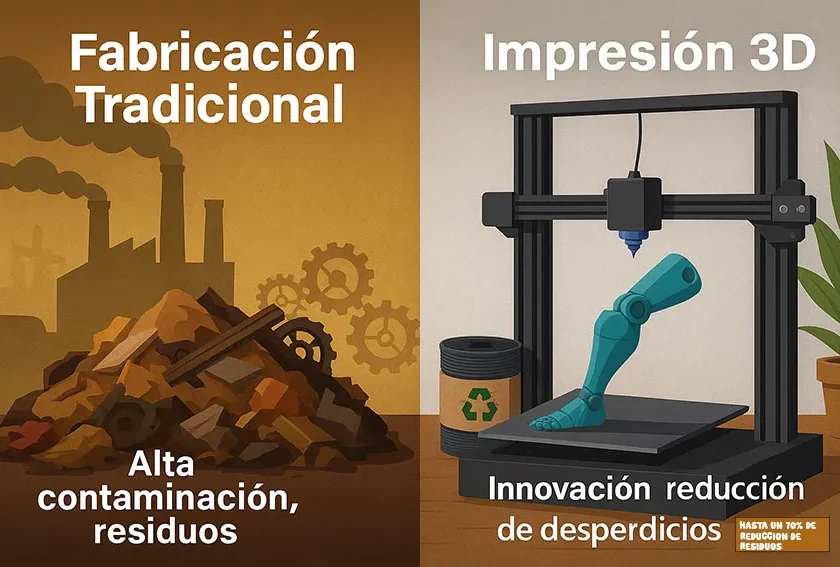
By enabling local production of parts and products, 3D printing reduces the need for long-distance transportation, thereby reducing the greenhouse gas emissions associated with transporting goods. In addition, by manufacturing on demand, overproduction and unnecessary warehousing is avoided, contributing to a more efficient and environmentally friendly supply chain.
Local and on-demand production: is it as green as it seems?
The ability to produce customized objects where and when needed reduces material and energy waste. This flexibility also allows for better adaptation to local needs, minimizing the environmental impact associated with mass production and excess inventory.
These advantages position 3D printing as a potentially sustainable tool. However, it is essential to also analyze the challenges and limitations facing this technology in terms of sustainability, which will be explored in the following sections of the article.
Sustainability challenges in 3D printing
While 3D printing offers ecological advantages, such as reduced transportation and on-demand production, not everything is as positive as it seems. There are significant challenges to consider if this technology is to be truly sustainable in the long term.
The plastic problem: more solutions or more waste?
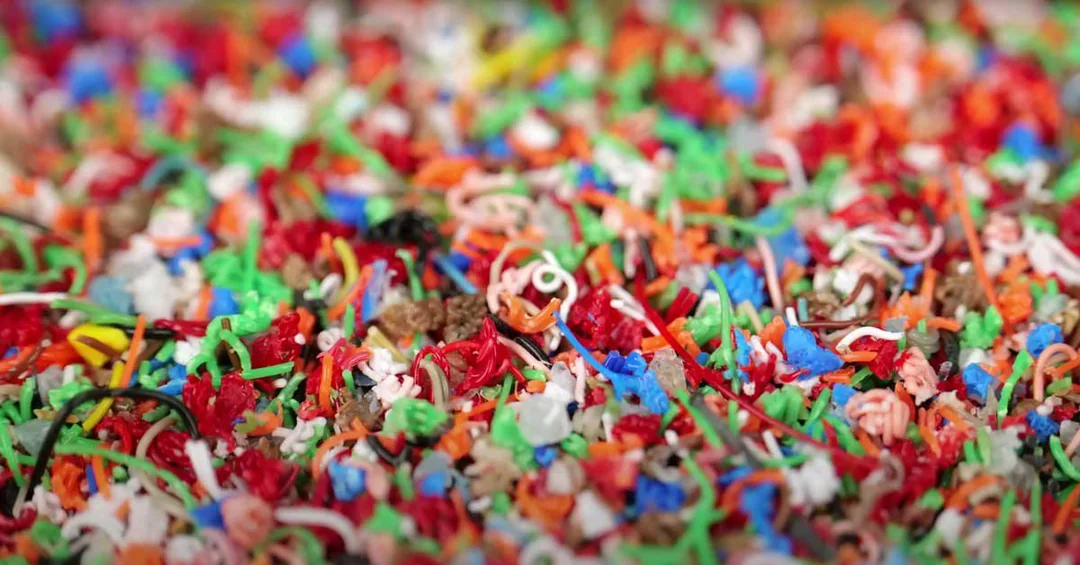
The vast majority of desktop 3D printers use plastic filaments such as PLA, ABS, PETG, among others. While some of these materials are recyclable (such as PLA), the reality is that the infrastructure for recycling them is limited. In addition, a lot of printing waste ends up in the regular trash.
According to a study by the University of California (2023), 85% of 3D printing scrap (such as supports and bugs) is not recycled correctly. This generates a large amount of microplastics and waste that end up polluting the environment.
🔗 Source: 3D Printing Waste Study - University of California
Compostable PLA? The myth behind biodegradability
Many users believe that PLA filament is eco-friendly because it is «biodegradable,» but this is only partially true. PLA requires specific industrial composting conditions (high temperatures and controlled humidity) to break down effectively.
In domestic or natural environments, it can take decades to decompose, behaving like any other plastic.
🔗 Video: Is PLA really biodegradable?
Energy consumption: are we really saving energy?
3D printers, especially those that work with high temperatures such as FDM or resin technology, can consume a considerable amount of electrical power.
A report by Additive Manufacturing Journal (2024) warns that, while 3D printing avoids certain energy consumptions of traditional industry, it is not always more energy efficient in large productions.
🔗 Source: 3D Printing Energy Consumption Study - Additive Manufacturing Journal
Environmental challenges of 3D printing: Are we creating more problems than we solve?
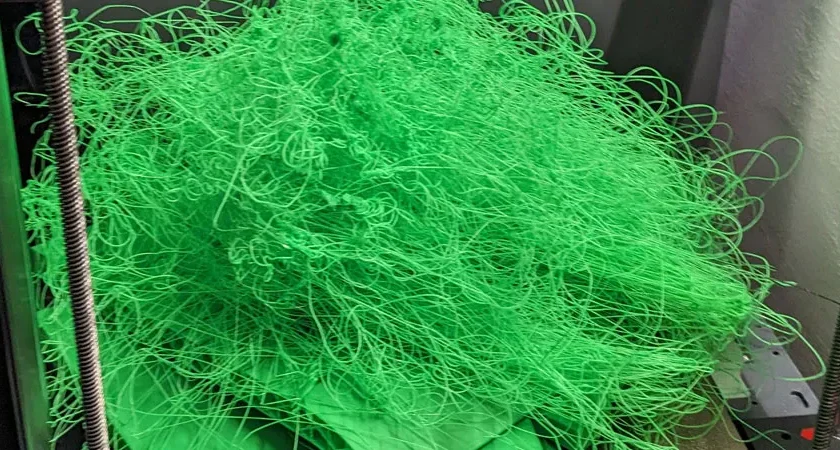
Although 3D printing is seen by many as a sustainable technology, it is not without its problems and challenges that we must consider if we are to move towards a more environmentally friendly future.
Among the main environmental challenges of 3D printing are:
High energy consumption
Although 3D printers make it possible to manufacture parts without material waste, many of them require a large amount of energy to operate, especially those that work with advanced materials such as resins or metals. This means that if the energy source does not come from renewable sources, the carbon footprint generated by 3D printing can be significant.
According to a study by Loughborough University, the energy consumption of 3D printing can be between 50% and 100% higher than traditional processes such as injection molding in some specific cases (source: Loughborough University - Energy Consumption in Additive Manufacturing).
Difficulty in recycling certain materials
Another major challenge is the variety of materials used in 3D printing. Although some filaments such as PLA are biodegradable, most of the plastics used, such as ABS, PETG or photopolymer resins, are difficult to recycle and can end up accumulating as polluting waste.
In addition, the recycling of 3D printed parts is not so simple, as many parts contain mixtures of materials or contaminants that make them difficult to treat in conventional recycling plants.
Generation of microplastics and particulate emissions
During the printing process, especially in FDM printers, ultrafine particles and volatile organic compounds (VOCs) are released, which can be harmful to health and the environment.
A study by the U.S. National Institute for Occupational Safety and Health (NIOSH) indicates that 3D printing with certain filaments, such as ABS, emits more particulate matter than other materials such as PLA, which could contribute to indoor air pollution and eventually to the generation of microplastics in the environment (source: NIOSH - Emissions from 3D Printers).
Use of non-renewable materials
Most of the filaments and resins used in 3D printing come from petroleum derivatives, which implies a dependence on limited fossil resources.
While more sustainable alternatives exist, such as recycled filaments or bioplastics, their mass adoption is still low due to cost, limited availability and, in some cases, lower performance.
Planned obsolescence and device consumption
The exponential growth of the 3D printer market also raises the issue of planned obsolescence.
Many models become outdated within a few years, generating additional e-waste. In addition, users often accumulate printers, upgrades and parts that may become obsolete, increasing the volume of technological waste.
Case studies: studies and examples of sustainability in 3D printing
Despite the environmental challenges presented by 3D printing, there are initiatives and studies that demonstrate its potential to contribute to sustainability when implemented consciously and strategically.
Quantis study: Comparison with injection molding
The environmental consulting agency Quantis compared three 3D printers of different costs with injection molding production.
The study concluded that 3D printing is more environmentally friendly for small-scale productions (less than 1000 parts), while injection molding is more efficient for large volumes.
In addition, they stressed that 3D printing allows for mass customization without significantly increasing the environmental impact. The best information about 3D Printing +1TP3D 3D Printing+1TP3D 3D Printing+1
Artificial coral project in Puerto Rico
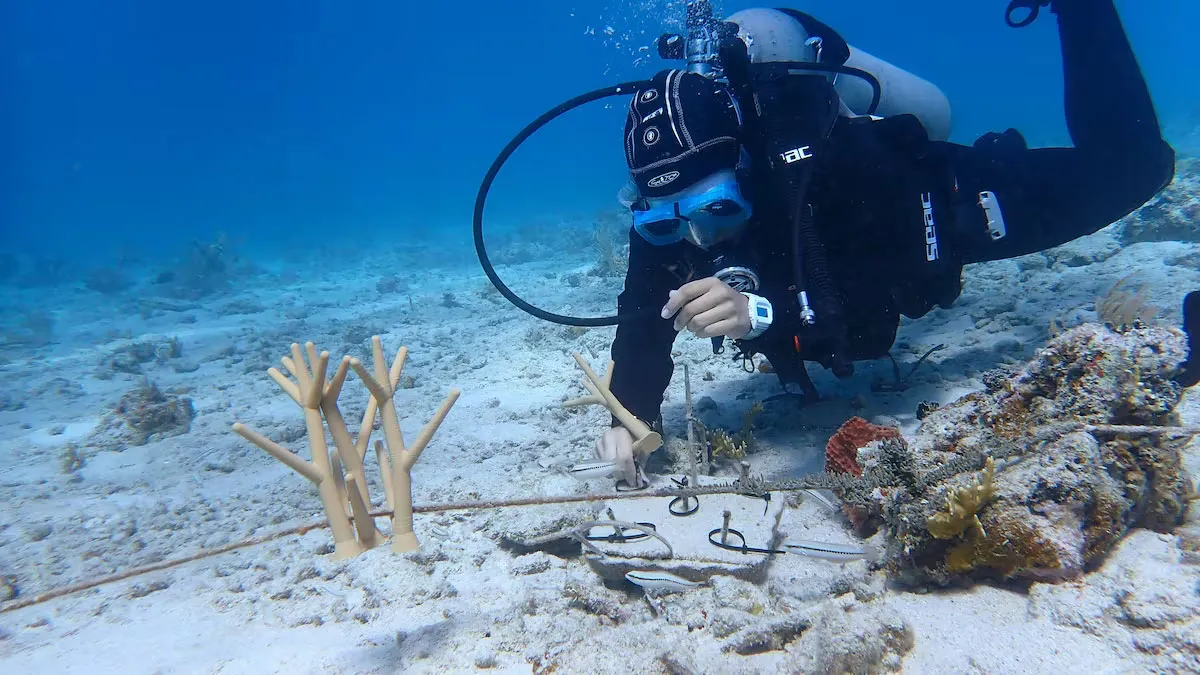
In Puerto Rico, marine biologists are using 3D printers to create artificial corals to revitalize reefs devastated by hurricanes. These corals, made from corn starch, help attract fish and restore biodiversity in affected areas.
To date, more than 10,000 corals have been installed around Culebra Island, increasing the fish population and benefiting the local fishing industry. El País
Development of soles and heels from tanned leather residues
The Footwear Technology Center of La Rioja (CTCR) is developing soles and heels by 3D printing using tanned leather waste.
This project seeks to recycle the 3,500 tons of leather trimmings generated annually by the footwear industry in Spain, many of which end up in landfills.
The process includes micronization of the skin particles to create a filament suitable for 3D printing, which decreases the industry's carbon footprint .Cadena SER
These cases demonstrate that, with innovation and commitment, 3D printing can be a valuable tool for promoting sustainability in a variety of industries.
How to make your 3D printing more environmentally friendly?
Sustainability in 3D printing depends not only on the technology, but also on the choices we make as users. While the environmental impact of this technology can be considerable, there are simple practices and strategies that will allow you to reduce your ecological footprint and contribute to a more responsible use of resources.
1. Choose sustainable filaments
Opting for recycled or biodegradable materials is the first step. Today, there are filaments such as recycled PLA, recycled PETG and bioplastic options that degrade more easily. For example:
- Recycled PLAMade from printing waste, it helps to reduce plastic waste.
- Recycled PETGMade from recovered plastic bottles, it is resistant and versatile.
- Biodegradable filamentsSome composites with wood, coffee husks or algae allow for the creation of more sustainable pieces.
Example: Filament Reflow rPLA either Filamentive rPETG are options widely recognized for their low environmental impact.
2. Optimize the design of your models
Efficient design can drastically reduce the amount of material used. Some recommendations:
- Use low infill (10-20%) for non-structural parts.
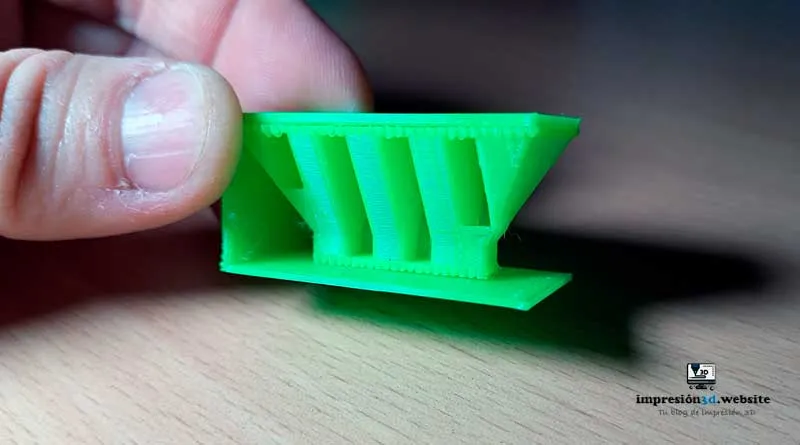
- Reduce supports: Adjust the design to minimize overhangs or use soluble supports.
- Applies type structures honeycomb either gyroid to maintain strength with less material.
3. Use leftover and recycled filament.
Instead of discarding filament scraps or failed prints, reuse them:
- It uses systems such as Filabot either Felfil Evo to shred and extrude your own recycled filament.
- Save scraps organized by color and use them in multicolored or experimental projects.
4. Print only what is necessary
Avoid printing for the sake of printing. Ask yourself:
- Do I really need this part?
- Can I redesign it to be lighter?
- Can I share the file online instead of physically producing it?
This mentality helps to curb unnecessary consumption and reduce waste.
5. Use energy from renewable sources
If possible, power your 3D printer with solar or wind energy. This not only decreases your carbon footprint, but also takes advantage of clean and sustainable sources.
6. Participate in community recycling initiatives
Some makers' communities organize collection points for filament or failed prints to collectively recycle them. Participating in these programs or even promoting them in your city can make a big difference.
Will 3D printing be part of a sustainable future?
3D printing has the potential to be a key tool for building a more sustainable future, but that potential depends on how it is implemented on a large scale.
Today, the industry is evolving and experimenting with new solutions to reduce environmental impact, but it also faces significant challenges.
What factors drive sustainability in 3D printing?
- Local and on-demand productionBy printing only what you need, when you need it, you reduce waste and eliminate the need for large warehouses and long-distance transportation.
- Reduction of material wasteUnlike traditional machining, 3D printing uses only the material needed for each part, minimizing waste.
- Efficient customizationAllows to manufacture specific parts for each user, avoiding overproduction.
- Recycling of materialsNew filament recycling technologies make it possible to transform waste into new reusable spools.
- Innovation in materialsBioplastics and recycled filaments are being developed to help reduce dependence on petroleum-based plastics.
➡️ Real example: Reflow and Filamentivecompanies that produce recycled filaments from industrial waste have demonstrated how 3D printing can be integrated into the circular economy.
Challenges that 3D printing still needs to overcome to be sustainable
- High energy demand3D printers, especially industrial printers, consume a lot of electricity. This is a problem if that energy comes from non-renewable sources.
- Difficulty in recycling certain plasticsFilaments such as ABS, ASA or TPU require more complex recycling processes and are not always efficiently reused.
- Lack of environmental regulationThe 3D printing industry still lacks strict regulations to ensure sustainable practices in production and waste management.
- Technological obsolescenceMany low-end 3D printers tend to become obsolete or are discarded after a short time, generating electronic waste.
What can we expect in the future?
The global trend points to greater environmental awareness in additive manufacturing. Innovation in recycled materials, optimized part design, the creation of home recycling systems and the use of renewable energies will make a difference in the coming years.
However, the sustainability of 3D printing is not automatic: it requires responsible decisions by manufacturers, users and governments.
Interested in sustainable 3D printing? Use Justway.com's online 3D printing service!

If you are looking for a way to take advantage of the benefits of 3D printing without investing in a machine, without worrying about plastic waste and with the peace of mind of knowing that your parts are manufactured responsibly, Justway.com is the solution you were waiting for.
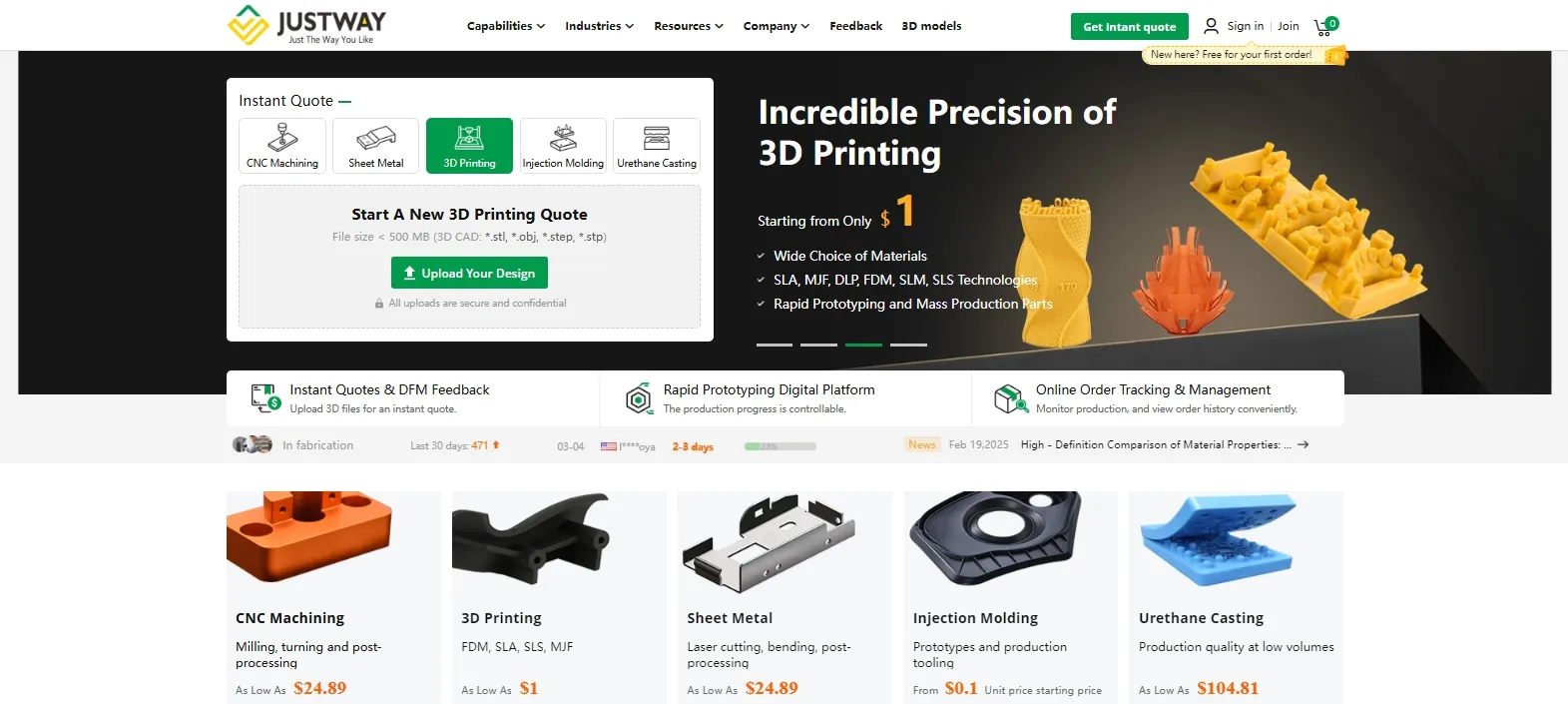
Justway.com is an online 3D printing services platform that allows you to upload your 3D models and receive the finished parts at home, ready to use. But what really makes Justway stand out is its commitment to sustainability and environmental stewardship.
Benefits of using Justway.com's 3D printing service
Responsible and sustainable production
Justway.com prioritizes the use of biodegradable materials such as PLA, reducing the generation of plastic waste in each project. In addition, its printers work with optimized energy consumption, which helps to reduce the carbon footprint.
No need to purchase equipment or generate waste
You don't need to have a 3D printer at home, or worry about wasted filament, printing errors, or failed parts ending up in the trash. Justway takes care of the entire process, ensuring efficient and quality manufacturing.
Optimized logistics for less environmental impact
Justway.com has optimized shipping and responsible packaging, reducing transportation pollution and minimizing the use of disposable plastics.
Materials and finishes for all projects
From functional parts to complex prototypes, Justway offers a wide range of materials, colors and finishes to suit any need, always with a sustainable approach.
Saving time and money
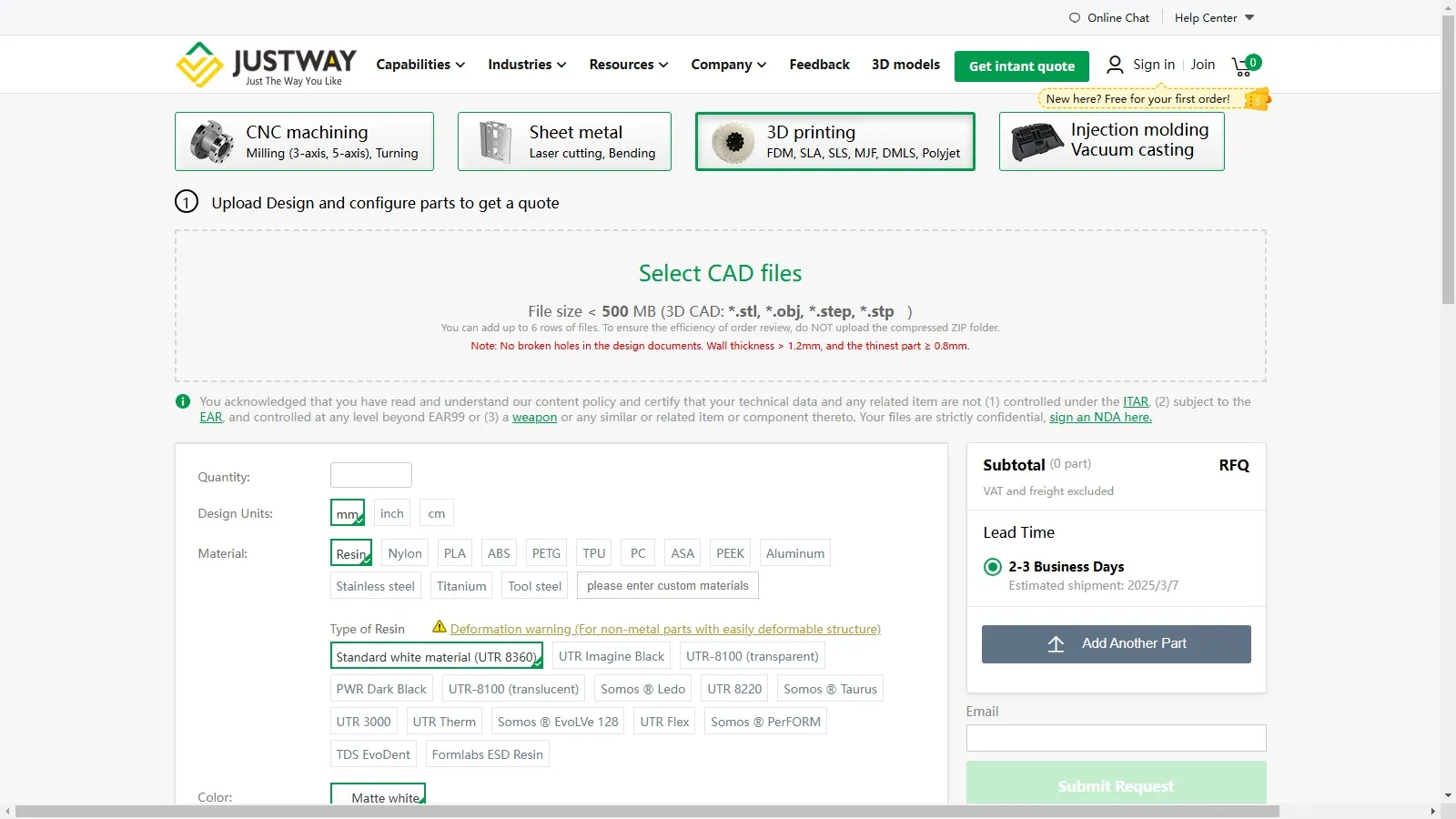
You don't need to spend on a printer or learn about calibration, maintenance or repair. You simply upload your file, choose your preferences and Justway takes care of the rest. So you can focus on your projects without the technical hassle.
Why choose Justway.com for sustainable printing?
Because choosing Justway means betting on a more conscious, less polluting and much more efficient production. Instead of filling your home with plastic or discarding poorly made pieces, you can trust professionals who will make your model a reality with the minimum environmental impact.
Ready to get started?
Visit Justway.com and discover how your next 3D print can be more sustainable, economical and simple.

Conclusion: Sustainable 3D printing is possible, if we make responsible decisions.
3D printing has revolutionized the way we design, manufacture and consume products, but it also confronts us with important challenges such as energy consumption, plastic waste management and the choice of more planet-friendly materials.
Adopting more sustainable practices, such as using recycled filaments, reusing substrates, choosing really useful parts and reducing failed prints, are key steps to minimize the environmental impact of this technology.
In addition, opt for services such as Justway.comThe company's sustainability-first approach to printing is an excellent way to contribute to a more responsible future.
3D printing is not only a tool to create, but also an opportunity to generate positive change. It is up to us how we use it.
📝 Now it's your turn!
I invite you to reflect on your own experience:
- What sustainable practices do you apply in your 3D printing projects?
- Did you know the real impact of plastic consumption in 3D printing?
- What do you think about services like Justway.com?
👉 Leave me your comment below, I want to know what you think and how you live 3D printing in your day to day life.
Also, register for free in the community of 3dprinting.website to receive our guides, news and participate in discussions with other passionate makers like you.
Let's build together a community that prints better, consumes less and respects the planet more!



Responses