
What is PolyJet? Multicolor resin 3D printing


What is PolyJet 3D printing?
PolyJet 3D printing is a technology that allows the creation of detailed and multicolored parts using liquid resins cured with UV light. It stands out for its ability to combine different materials in a single print, achieving functional and realistic models.
It is ideal for precise prototypes, customized products and applications where aesthetics and detail are essential.
In this article, we will explore its operation, applications and how to access this type of printing through platforms such as PCBWay.
Why is it called PolyJet?
The term «Poly» refers to the ability to work with multiple materials and colors in a single print, while «Jet» refers to the process of injecting precise droplets of liquid resin onto the print bed.
These beads are instantly cured with UV light, which allows building objects layer by layer with great detail and complex combinations of materials and shades.
Brief history of PolyJet
PolyJet technology was developed in the 2000s by the Israeli company Objet Geometries, which later merged with Stratasys, one of the leading 3D printing companies.
PolyJet was introduced as an innovative solution that combined high precision with the ability to print on multiple materials and colors in a single operation.
What is PolyJet 3D printing for?
PolyJet 3D printing is ideal for applications that require models with precise details, smooth surface finishes and the ability to combine different materials and colors in a single part.
The main uses of this technology are highlighted below:
Advanced prototypings
PolyJet enables the creation of functional and visual prototypes with exceptional accuracy, perfect for validating designs prior to final production. The ability to simulate rigid, flexible, transparent or opaque materials makes it a key tool in industries such as automotive and aerospace.
Custom tooling and mold making
It is used to manufacture silicone molds, custom tooling and jigs that optimize production processes. The speed of printing significantly reduces manufacturing time compared to traditional methods.
Medical and dental sector
In medicine and dentistry, PolyJet is used to create accurate anatomical models, customized surgical guides and patient-specific dentures. The ability to reproduce textures and colors improves medical planning and diagnosis.
Product design
The technology is prized in industrial design for its ability to produce highly detailed models that help evaluate the appearance and functionality of products before they are launched.
Production of customized final parts
In sectors such as jewelry or fashion, PolyJet allows the production of customized parts with high quality finishes that do not require complex post-processing.
Art and architecture
Thanks to the ability to print in multiple colors and materials simultaneously, artists and architects can create complex and visually stunning models that combine aesthetics and functionality.
How does polyjet technology work?
PolyJet 3D printing technology uses a material injection process similar to an inkjet printer, but adapted to work with liquid photopolymer materials that cure under ultraviolet (UV) light. This method makes it possible to create parts with high precision, smooth surfaces and combinations of colors and materials in a single print.
1. Photopolymer injection process
The PolyJet machine deposits ultra-thin layers of liquid photopolymer on a build platform. These layers are approximately 16-32 microns thick (depending on printer model and configuration), ensuring a very high level of detail.
2. UV light curing
After each deposited layer, the printer uses an integrated UV lamp to immediately cure and solidify the material. This process ensures that the layers adhere properly, forming a solid and precise structure.
3. Multi-color and multi-material capability
PolyJet employs multiple printheads that can work simultaneously to apply different materials and colors on the same layer. This makes it possible to create multi-material parts or models with smooth transitions between different colors and physical properties.

- Multicolor printing
PolyJet enables the printing of parts in a wide range of colors, including gradients, smooth transitions and realistic tones. This is ideal for creating concept models, visual prototypes and artistic pieces with a high level of detail and customization. Compatible printers can work with combinations of up to millions of colors, achieving representations faithful to the user's expectations.
- Integration of materials
In addition to colors, this technology can integrate materials with different mechanical and physical properties in the same part. For example, it is possible to combine rigid and flexible, transparent and opaque, or heat and impact resistant materials. This is very useful in applications such as:
- Functional prototypes with moving components.
- Medical models, such as simulated organs that combine hard and soft textures.
- Devices requiring partial transparency and color detail.
Multi-color and multi-material printing is performed in a single continuous process, saving time and reducing the margin of error.
This flexibility makes PolyJet an unmatched solution for industries such as industrial design, engineering, dentistry and visual marketing.
4. Supporting material
To construct complex geometries, such as overhangs or internal cavities, a specialized support material is used. This material is easy to remove, either manually or by pressure washing, which simplifies post-processing.
5. Precision control
Thanks to precise material injection and immediate curing, PolyJet can reproduce fine details, complex textures and intricate shapes with a level of accuracy that is difficult to match by other 3D printing technologies.
Key differences with other technologies
- SLA (Stereolithography): Although both use photopolymer resins, SLA uses a laser to selectively solidify the resin in a tank, while PolyJet injects the material directly.
- SLS (Selective Laser Sintering): SLS works with thermoplastic powders and lasers, making it more suitable for functional parts, but does not match the resolution or smooth finishes of PolyJet.
Advantages of the PolyJet process
- Fast and accurate printouts.
- Possibility of integrating multiple materials in the same piece.
- Smooth, ready-to-use finishes without the need for complex post-processing.
- Suitable for visual and functional prototypes, as well as for high quality final parts.
What is photopolymer resin?
The photopolymer resin is a liquid material used in 3D printing technologies such as PolyJet and SLA (Stereolithography). It is called a «photopolymer» because it reacts and hardens (polymerizes) when exposed to ultraviolet (UV) light.
This material is key to achieving impressions highly detailed, soft and preciseIt can be hardened layer by layer with great accuracy.
Types of resins used in PolyJet
PolyJet technology employs a variety of photopolymer resins designed to meet different functional, aesthetic and mechanical requirements.
Rigid resins
Rigid resins are ideal for creating parts that require dimensional stability and high precision. These resins offer a texture similar to hard plastic and are commonly used for:
- Mechanical prototypes.
- Structural parts.
- Electronic and assembly components.
Flexible resins
Flexible resins allow the manufacture of parts with elasticity and resistance to deformation. These resins mimic the properties of rubber and are perfect for:
- Ergonomic handles.
- Gaskets and seals.
- Prototypes with soft components.
Transparent resins
Transparent resins are ideal for parts that need visual clarity, such as lenses, conceptual models or aesthetic components. They offer high optical quality and can be used in:
- Packaging prototypes.
- Medical models that simulate translucent tissues.
- Lighting design.
High temperature resins
These resins are designed to withstand extreme thermal conditions, making them ideal for functional testing and engineering applications. They are used in:
- Prototypes of automotive components.
- Molds and tooling parts.
- Electronic test devices.
Multimaterial resins
PolyJet allows the combination of multiple resins in a single print, offering color gradients, transparency levels and different mechanical properties. These combinations are useful for:
- Complex prototypes that integrate different textures.
- Parts with rigid and flexible components.
- Detailed anatomical models.
Biocompatible resins
For applications in the medical sector, such as dentistry and customized medical devices, biocompatible resins are essential. These resins meet strict biocompatibility standards, allowing:
- Manufacture of dental aligners.
- Prosthetics and medical devices for testing.
- Surgical models.
Advantages and disadvantages of PolyJet 3D printing
| Advantages | Disadvantages |
|---|---|
| High accuracy and resolution | High cost of printers and materials |
| Support for multiple materials | Photopolymeric materials can be brittle |
| Full color printing | Parts may not withstand high temperatures |
| Smooth and professional finish | May require cleaning and post-processing |
Types of photopolymer resin and their applications
| Resin Type | Description | Main Application |
|---|---|---|
| Rigid | Simulates hard plastics such as ABS | Functional prototypes and housings |
| Flexible | Simulates rubber or silicone | Gaskets, seals, shoe parts |
| Transparent | Allows you to see through the material | Lenses, electronics housings, medical models |
| Biocompatible | Suitable for use in contact with the human body | Surgical guides, dental prostheses |
| Opaque Colors | Pigmented resins in different colors | Color models for marketing and design |
Differences between PolyJet and other resin 3D printing technologies
Resin 3D printing encompasses several technologies, each with its own specific characteristics and advantages. PolyJet, SLA (Stereolithography) and SLS (Selective Laser Sintering) are some of the most recognized.
Resolution and detail
PolyJet: It offers extremely high resolution, with layers as thin as 16 microns. This makes it possible to create models with intricate details and very smooth surface finishes. Its multi-color and multi-material capability excels in applications requiring high aesthetic fidelity.
SLA: Although it also produces high-resolution parts, the final texture is usually slightly rougher than PolyJet, requiring post-processing for a perfect finish.
SLS: Less accurate in terms of fine detail due to the nature of the sintered powder, but excellent for functional parts.
Materials and properties
PolyJet: Compatible with a wide range of resins that allow rigid, flexible, transparent and opaque properties to be combined in a single print. Its multi-material capability is unmatched among resin technologies.
SLA: It uses photopolymeric liquid resins, generally focused on rigid or biocompatible properties. It has less variety than PolyJet in terms of multi-material combinations.
SLS: It uses polymer powders instead of liquid resins, such as nylon. It is more suitable for functional prototypes that need mechanical strength.
Print speed
PolyJet: It is faster compared to SLA because it prints complete layers using multiple resin nozzles.
SLA: The speed depends on the size and complexity of the part, as the laser solidifies the material layer by layer.
SLS: Slower than PolyJet, but can be more efficient for production batches due to its ability to stack parts in the build volume.
Surface finish
PolyJet: Produces smooth, ready-to-use surfaces ideal for visual prototypes or presentation models.
SLA: It provides a good finish, but usually requires additional sanding or polishing.
SLS: Generally, the finish is rougher and more porous, suitable for functional parts rather than aesthetic presentations.
Operating costs
PolyJet: Tends to be more expensive due to the price of materials and advanced equipment technology. Ideal for high quality prototypes.
SLA: Relatively more affordable in terms of material and machinery costs.
SLS: Also expensive, but more focused on functional parts or small production runs.
PolyJet stands out for its ability to produce visually stunning, multi-material models, while SLA and SLS are more suitable for functional prototypes or specific applications. Which technology best suits your needs?
Are you interested in 3D printing with PolyJet technology? - PCBWay.com may be the solution you were looking for!

If you've been exploring options to take your 3D printing projects to the next level, PolyJet technology is undoubtedly one of the most advanced on the market. With its ability to print parts in multiple colors and materials in a single print, this technique offers a level of detail and realism that other technologies cannot match.
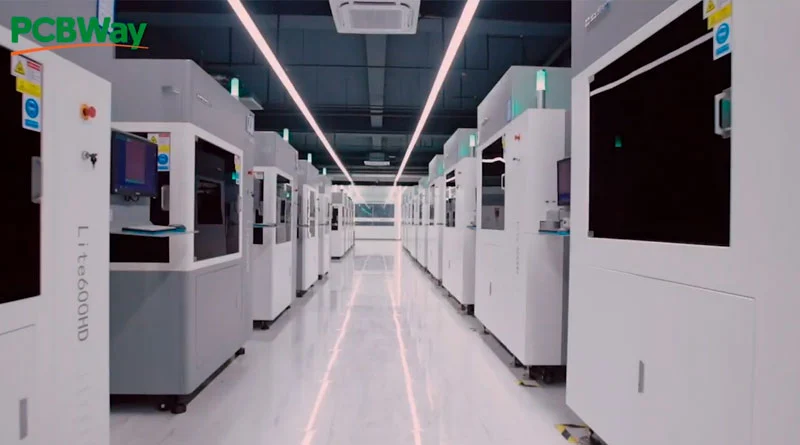
And the best part is that you don't need to have your own PolyJet printer: PCBWay.com offers you this service in a fast, reliable and affordable way.
Why choose PCBWay for your PolyJet 3D printing projects?
Variety of materials and finishes
PCBWay's platform allows you to choose from different types of photopolymer resins to meet your project needs. From rigid and transparent materials to flexible and biocompatible options, PCBWay has the perfect solution for every industry.
2. Multi-color printing in a single pass
Thanks to PolyJet technology, PCBWay is able to print parts that combine different colors and textures in a single print. This is ideal for creating realistic prototypes, presentation models and customized parts with a high level of visual detail.
3. Millimeter precision
PCBWay's PolyJet printing ensures smooth surfaces and fine details. This precision is especially important for projects that require exact tolerances, such as medical models, functional prototypes and jewelry.
4. Quick and easy process
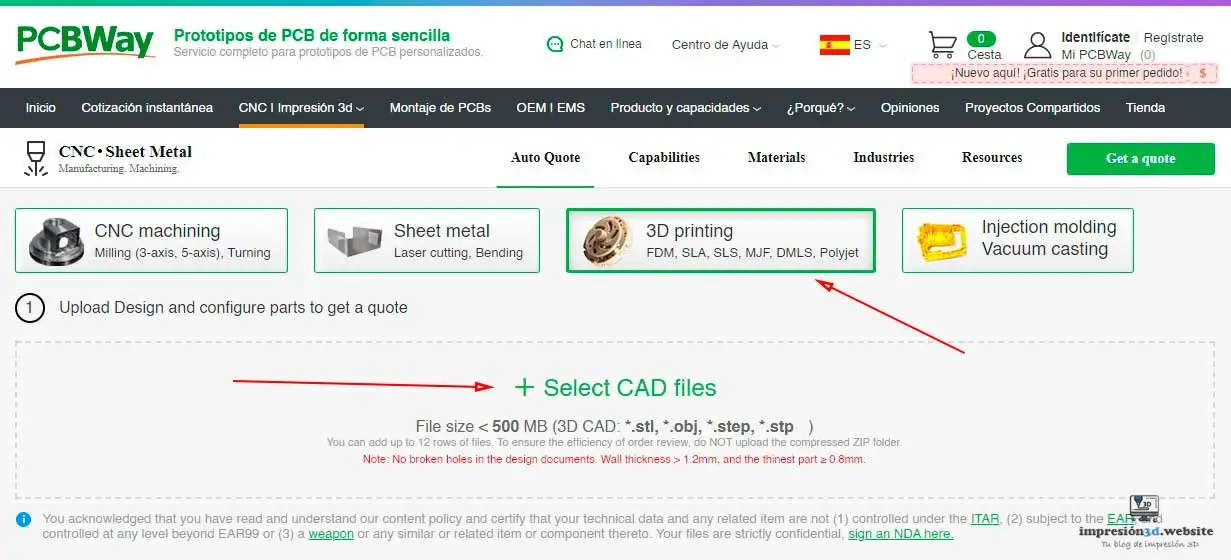
The process to request a 3D print on PCBWay is intuitive and fast. You only need to upload your 3D files to the platform, select the specifications of your project and you will receive a quote instantly. In addition, the platform has a support team that will walk you through every step of the process.
5. Global shipping and reliable delivery times
PCBWay offers worldwide shipping, ensuring that your parts arrive on time no matter where you are. Their delivery times are competitive and ensure that you can have your models printed in a matter of days.
Who is PCBWay PolyJet printing ideal for?
- Designers and artists who are looking for pieces with impeccable aesthetic finishes.
- Engineers and developers that require functional and accurate prototypes.
- Medical companies that require realistic anatomical models for surgical planning.
- Small companies and startups who are looking for an affordable service without the need to invest in expensive equipment.
Bring your ideas to life with PCBWay
It doesn't matter if your project is a functional prototype, a customized color figure or a complex medical model: PCBWay.com is ready to help you bring your ideas to life with PolyJet technology.
PCBWay's PolyJet 3D Printing Dimensions
| Description | Dimensions |
|---|---|
| Maximum construction size | 490 mm x 390 mm x 200 mm |
| Minimum construction size | 5 x 5 x 5 x 5 mm |
| Minimum wall thickness | 1.0 mm |
| Dimensional accuracy | L < 100 mm, ± 0.1 mm. L > 100 mm, ± 0.2 mm or 0.06 %*L (mm) (whichever is greater) |
Its 3D printing service allows you to access one of the most advanced additive manufacturing techniques, with the quality assurance and support that only PCBWay can offer.
Ready to get started? Visit PCBWay.com and upload your 3D file to receive a personalized quote. Discover how easy it is to take your projects to the next level!
If you need more information about PCBWay's PolyJet service you can follow this link this link
SUMMARY
PolyJet main features
✅ Ultra-high resolution: You can create fine details and smooth surfaces with a resolution of up to 16 microns per layer.
✅ Multimaterial: It is capable of printing with several materials at the same time, allowing combinations of rigid and flexible, opaque and transparent, etc.
✅ Full color: Some PolyJet printers allow full color printing, which facilitates the creation of realistic models.
✅ Smooth surface finish: Printed parts have a very smooth finish, which reduces or eliminates the need for sanding or polishing.
What is PolyJet 3D printing used for?
PolyJet technology is used in a variety of industries due to its ability to create realistic and functional models:
📐 Rapid prototyping
- It is used to manufacture high precision prototypes that look like finished products.
- Ideal for customer presentations and proofs of concept.
🦷 2. Medical and dental sector
- Manufacturing of realistic anatomical models for medical studies.
- Creation of customized surgical guides and dental prostheses.
🚗 3. Automotive and aerospace
- Prototyping of complex parts for design validation.
- Manufacturing of functional models for fit and assembly tests.
🎭 4. Arts and entertainment
- Creation of realistic models and accessories for film and television.
🖥️ 5. Electronics and consumer
- Manufacturing of electronic device housings and functional prototypes.
You may be interested:




Responses