
Industrial Sheet Metal Fabrication: Precision Prototyping and Mass Production

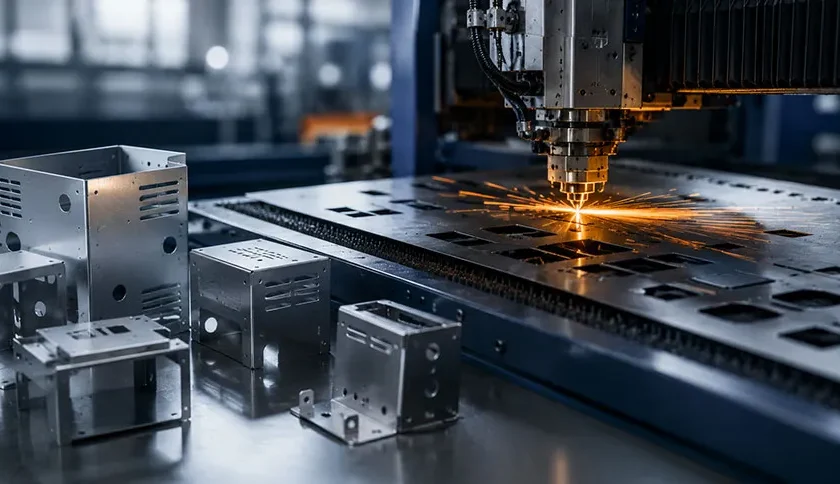
In the development of hardware, machinery, and electronic devices, the design of the housing is just as critical as the internal components it protects. When a project requires mechanical strength, thermal dissipation, electromagnetic interference (EMI) shielding, and long-term durability, the industrial sheet metal fabrication —widely known in the industry as Sheet Metal— has become the manufacturing technology of choice.
Unlike plastic injection molding or casting processes, which require expensive dies and months of development, the digital transformation of sheet metal allows for the transition from a flat CAD model to ready-to-assemble structural components in record time, optimizing both the prototyping phase and the transition to short-run production.
Key Technologies in Sheet Metal Fabrication: From CAD to the Finished Part
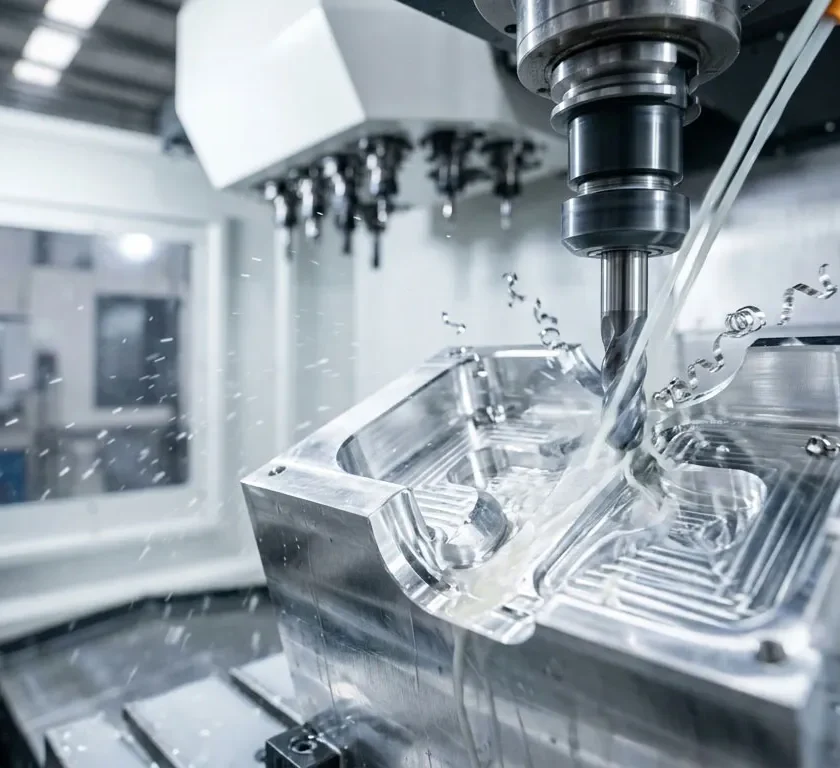
The modern workflow in a Sheet Metal Services The industrial process combines the precision of design software with high-powered CNC machinery. To transform a flat sheet of metal into custom brackets, frames, or housings with complex geometries, the material must undergo a strict sequence of cutting, forming, and joining.
Understanding how these technologies interact is the first step toward designing parts that are more efficient and easier to manufacture.
High-Speed Laser Cutting and Punching
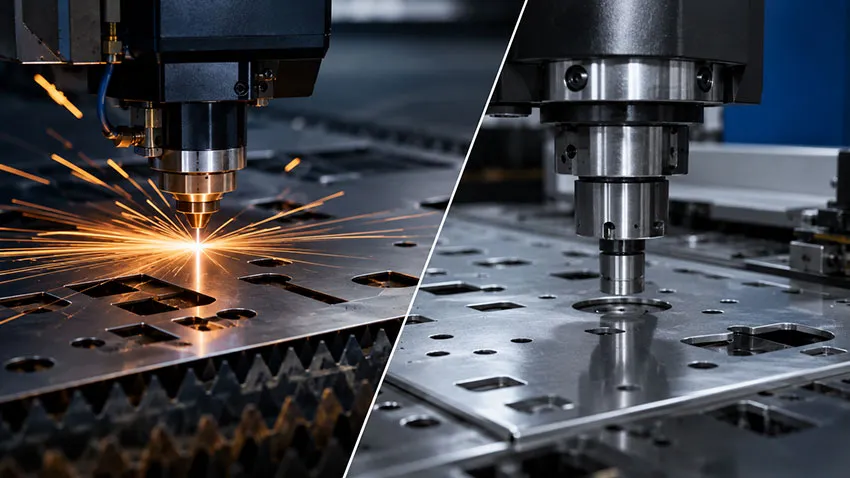
Every sheet metal component begins its life as a flat pattern (or unfolded template) cut from a sheet metal blank. The industry-standard method for this phase is the CNC laser cutting, a technology that uses a highly concentrated beam of light—typically generated by fiber-optic metal sources—to melt and vaporize the material along a programmed path.
Laser cutting stands out for its ability to produce intricate contours, microscopic ventilation slots, and holes with complex geometries, while maintaining perfectly clean, burr-free edges and an extremely narrow heat-affected zone (HAZ).
This ensures that the mechanical properties of the alloys remain intact. For operations requiring repetitive geometries or light drawing (such as countersinking or ventilation louvers), mechanical punching complements laser processing, offering unmatched processing speed in high-mix production runs.
Precision Bending and Welding
Once the flat pattern has been cut with millimeter precision, the piece moves on to the three-dimensional shaping stage. The sheet metal bending (Bending) is performed on CNC press brakes, where the sheet metal is positioned over a V-shaped die and pressed by an upper punch to achieve the desired bend angle.
In an industrial setting, bending requires a precise calculation of the Factor K and the bend allowance—physical variables that determine how much the metal will stretch when compressed at the inner radius and pulled at the outer radius.
Advanced numerical control ensures angular repeatability in every bend, a critical factor in ensuring that the mounting tabs align perfectly during assembly. Finally, if the chassis or housing design requires a higher level of watertightness or structural rigidity, processes such as welding specialized processes (such as TIG or MIG), joining the formed edges to create a robust, vibration-resistant monoblock.
Guide to High-Performance Materials for Sheet Metal Forming
Selecting the right material is the most critical factor in ensuring that a sheet metal component fulfills its intended function without failing or unnecessarily increasing the project's cost.
In the industrial manufacturing of Sheet Metal, not all metals react the same way to the pressure of bending or the heat of laser cutting. It is essential to evaluate properties such as ductility (the ability to deform without cracking), mechanical strength, conductivity, and corrosion resistance in order to identify the ideal alloy.
Technical Aluminum and Stainless Steel (304 / 316L)
Aluminum and stainless steel form the backbone of the manufacturing of housings and components exposed to harsh environments.
Engineering Aluminum Alloys
- Aluminum 5052: Considered the gold standard in sheet metal work. This aluminum alloy, primarily alloyed with magnesium and chromium, stands out for its excellent formability and bendability, eliminating the risk of cracks at bend radii. It offers high corrosion resistance (especially in marine environments) and excellent toughness, making it the material of choice for electronic chassis, control panels, and lightweight structural parts.
- Aluminum 6061: Although it is best known in the field of CNC machining due to its high structural strength, 6061 aluminum is also used in sheet metal applications where maximum mechanical strength is required. It is an excellent choice for components subjected to heavy structural loads or hot forging processes.
Stainless Steels
- 304 Stainless Steel: It is the most versatile and widely used austenitic stainless steel on the market. It offers superb resistance to oxidation and general atmospheric corrosion, combined with excellent ductility that facilitates deep drawing and complex bending.
- Stainless Steel 316 / 316L: It contains molybdenum in its chemical composition, which dramatically increases its resistance to pitting corrosion in chlorinated or marine chemical environments. It is the mandatory standard for medical instruments, the food industry, and marine hardware.
- Stainless Steel 201 and 301: Grades with high manganese and nitrogen content. 301 stainless steel, in particular, has a high work-hardening rate, making it ideal for parts that require high elastic strength (such as clips or sheet metal springs).
Carbon Steel (Mild Steel 1018) and Copper Alloys
When budget or specific physical properties such as electrical and thermal conductivity are the priority, mild steel and non-ferrous metals come into play.
Carbon Steel (Mild Steel)
- Mild Steel 1018: It is a low-carbon steel widely used for its excellent machinability, weldability, and toughness. Because it is a highly ductile material, it responds excellently to industrial bending and forming. It is the most economical and efficient option for manufacturing internal supports, hidden structures, and sturdy frames that will later receive a surface coating to prevent rust.
Copper and Brass
- Copper C110: An electrolytic copper of exceptional purity (99.91%), highly valued for its unmatched electrical and thermal conductivity. Because it is a hard and tough metal, it is difficult to weld or machine using conventional methods, but it is ideal for busbars (busbars), electrical terminals, and large heat sinks.
- Copper 101 (Oxygen-Free): High-conductivity (HC) oxygen-free copper. It prevents hydrogen embrittlement, making it essential for high-tech vacuum components, advanced electronics, and aerospace applications.
- Copper 260 (Brass): Cartridge brass is the most ductile of all brass alloys. It combines excellent corrosion resistance with a low coefficient of friction and superb formability, making it widely used in connectors, technical bushings, and durable decorative components.
Surface Finishes on Sheet Metal: Durability and Aesthetics
Once the sheet metal parts have been cut, folded, and welded, the component enters the finishing phase. In the ecosystem of Sheet Metal, Surface treatments serve three fundamental purposes: to remove tool marks or residual burrs, to protect the base metal from corrosive environmental factors, and to provide the visual appearance or electrical conductivity required by the final design.
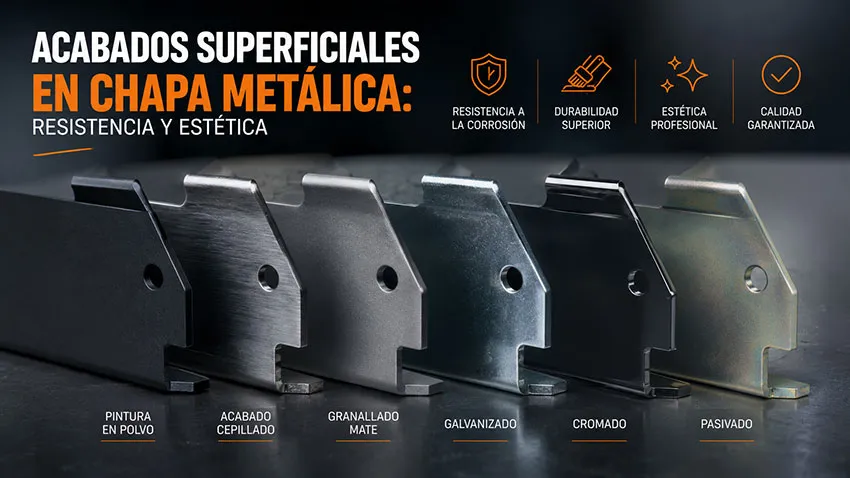
Depending on the material selected (aluminum, steel, or copper), the JUSTWAY platform allows for the application of a wide range of standardized technical coatings:
From the machine-finished state to anodizing
- Machine Standard (As-Milled / As-Fabricated): This is the option with the fastest turnaround time. The parts are delivered straight from the manufacturing process, eliminating sharp edges and mechanical burrs by default. They retain an industrial finish, where slight marks from the bending or cutting tools may be visible, with an average surface roughness.
- Shot blasting (Bead Blast): This process involves blasting the surface with glass beads under high pressure. It cleans the metal and completely hides cut lines or bending marks, leaving a uniform, smooth, satin-like matte finish. It is the ideal preparatory step for maximizing the adhesion of subsequent coats of paint.
- Anodized (Clear and Colored): Exclusively for non-ferrous metals (primarily aluminum). Through an electrolytic process, the metal’s natural oxide layer is thickened, creating an ultra-hard coating that inhibits corrosion. The finish can be colorless (Clear) or be painted in a variety of standard colors (black, red, yellow, blue, gold), while retaining the sheet metal's original metallic texture.
- Electrically Conductive Oxidation (Electrically Conductive Oxidation): A chemical passivation treatment that creates an extremely thin protective film (between 0.011 and 0.15 μm). Unlike conventional anodizing, this coating protects the metal from oxidation without electrically insulating it, which is critical for enclosures that require ground continuity and electromagnetic interference (EMI) shielding.
- Pavonado (Black Oxide): Chemical conversion treatment applied to carbon and stainless steels. It alters the metal's surface to form a dark layer that minimizes light reflection, improves contact lubricity, and provides moderate corrosion resistance without altering the geometric tolerance dimensions.
- Brushing (Brushed): A mechanical finishing process in which sheet metal is treated with abrasive belts to create uniform, directional micro-scratches. Although it is primarily used for aesthetic and decorative purposes on stainless steel or aluminum, it helps to conceal wear and tear from daily use.
Advanced Coatings: Powder Coat and Liquid Paint
When sheet metal components are exposed to harsh weather conditions or constant friction, or when they require an exact corporate color match from the Pantone color system, powder coatings provide the best protective barrier:
- Matte Powder Coat (Powder Coat – Matte): It is one of the most durable industrial coatings. Electrostatic powder coating is applied dry to the metal sheet and then placed in a high-temperature curing oven to melt it. The result is a thick coating that is resistant to impacts, scratches, and UV rays, with a flawless textured matte finish.
- Liquid Spray Paint (Spray Painting – Matte and High Gloss): It uses airbrushes to spray liquid paint in fine droplets onto the surface, available in both matte and high-gloss finishes (High Gloss). It is compatible with aluminum, titanium, and plastics, can be customized to match any Pantone color, and provides a smooth, high-quality finish for visible external components.
Rapid prototyping and flexibility in 4 days with JUSTWAY
Need to turn an idea into a working prototype in just a few days? Find out how JUSTWAY can help you speed up the development of your projects with fast, flexible, and customized industrial sheet metal fabrication.

In new product development, speed and adaptability often make the difference between an idea that moves forward and a project that falls behind schedule. JUSTWAY’s industrial sheet metal fabrication service accelerates the development process through a focus on rapid prototyping and flexible production cycles, significantly reducing the time between design and the delivery of functional parts.
Are you looking for a fast and affordable way to produce high-quality metal prototypes? With JUSTWAY, you can access industrial sheet metal fabrication services featuring fast turnaround, professional precision, and support for mass production—now with an exclusive promotion starting at just $9.
Explore solutions from JUSTWAY and streamline your prototyping and production process with a service designed for developers, engineers, and manufacturers.
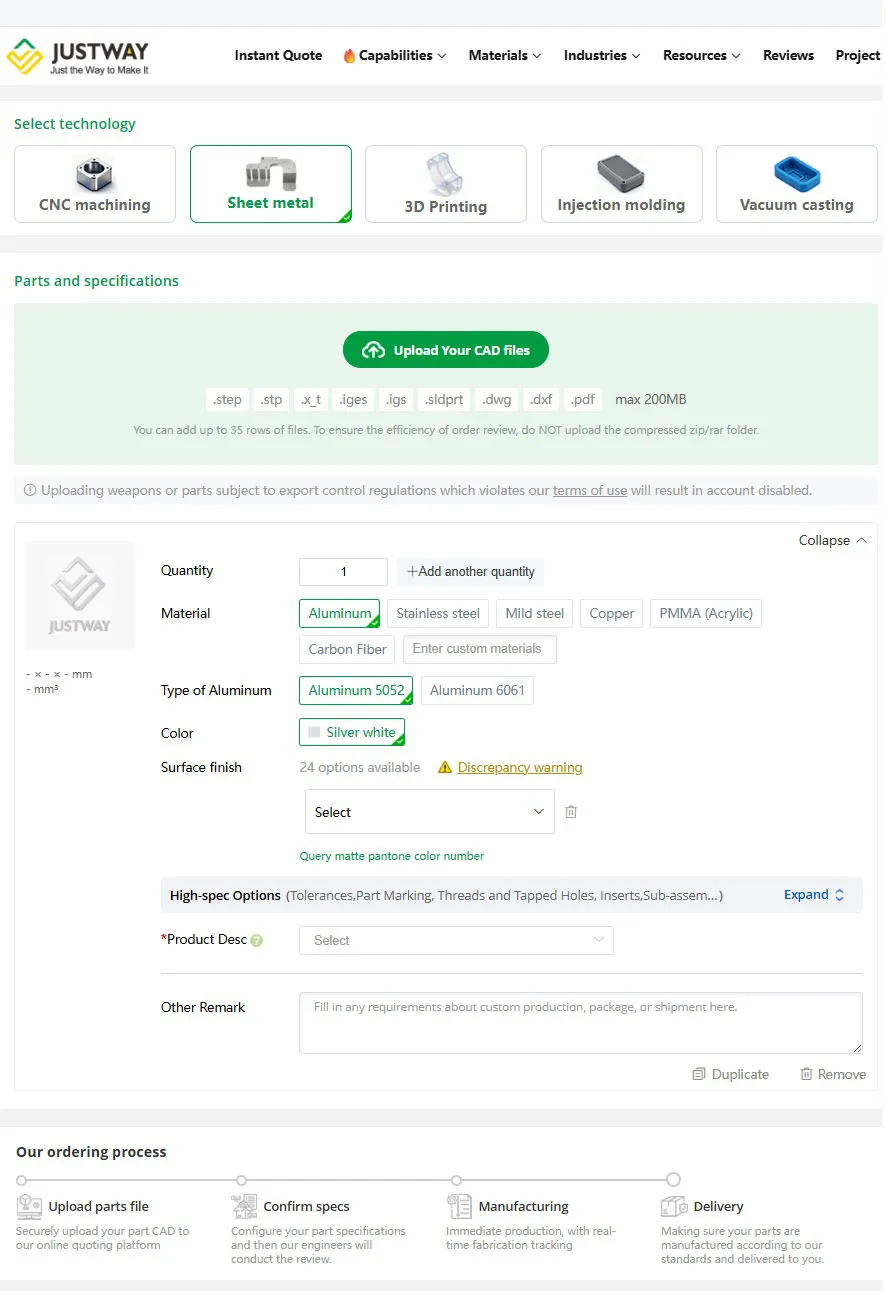
The platform stands out for offering rapid manufacturing capabilities and digital process management, designed for both prototyping and scalable production. Bring your project from design to reality faster.
The best benefits
By centralizing the entire workflow within an advanced digital infrastructure, JUSTWAY delivers key benefits that optimize the development cycle for any engineering project:
- Record delivery times (4 days): Speed is the platform’s greatest strength. JUSTWAY can manufacture and ship between 1 and more than 50 functional sheet metal prototypes in just 4 days, allowing design teams to perform fit tests, assembly validations, and mechanical strength tests without delaying project deadlines.
- Complete flexibility in volume (Short Series): Unlike traditional suppliers, who require massive production volumes to recoup the costs of machine setup, JUSTWAY has no minimum order requirements. You can order anything from a single prototype for validation to small production runs, allowing us to perfectly adapt to your development phases and budgets.
- Automated DFM Analysis: When you upload your CAD drawings to the platform, its software engine intelligently analyzes the design’s manufacturability (Design for Manufacturing). The system automatically detects whether the bend radii are feasible for the selected sheet thickness or whether the laser perforations are too close to a bend line, preventing critical errors before the metal is cut.
- Absolute Structural Versatility: Whether your project requires custom internal brackets, heavy-duty frames, electromagnetically shielded enclosures for electronics, or complex components with intricate geometries, the platform’s fleet of CNC machines covers the entire spectrum of industrial fabrication.
- Compliance with Physical Properties: By working with the various aluminum alloys, stainless steels, carbon steels, and non-ferrous metals described above, JUSTWAY ensures that every part strictly meets the requirements for mechanical strength, thermal conductivity, insulation, and corrosion protection specified in the technical drawings.
Sheet metal fabrication also offers great flexibility for working with different geometries and applications. Electronic enclosures, industrial cabinets, structural supports, custom panels, or mechanical components can be produced using processes such as laser cutting, bending, and post-processing, adapting to the specific requirements of each project.
During the early stages of development, it is common to make numerous adjustments: modifying dimensions, reinforcing critical areas, or adapting designs to optimize assembly. An agile rapid prototyping process allows changes to be implemented between versions without the limitations that often arise in more rigid manufacturing systems.
Don't wait any longer!
Turn your designs into real objects with the speed and precision of JUSTWAY. Take advantage of this promotion Specialized in industrial sheet metal fabrication starting at $9 (formerly $25) and get access to rapid prototyping, professional finishes, and flexible production for projects of any scale.
Outsourcing sheet metal fabrication to a technology partner like JUSTWAY allows engineering firms to offload the operational complexities of the manufacturing process, ensuring the highest industrial quality in record time.
Join the technical discussion
Designing sheet metal components requires careful consideration of the bending factor and the material’s mechanical behavior to avoid costly assembly errors during the prototyping phase. What variables do you consider most critical when designing industrial chassis or enclosures, and how do you address tolerance challenges in your designs? Please share your experience in the comments section.
If you want to play an active role in the evolution of industrial design and digital manufacturing, engage with other professionals in the field, and gain access to exclusive features on our platform, Sign up on our website. Join the region's largest manufacturing and engineering community today!

Responses